Guide
Understanding Annotation Services for AI and Machine Learning
Annotation services are the professional labeling of data, including images, video, text, audio, 3D point clouds, and multi-modal combinations, to create training datasets for machine learning. Every supervised AI model depends on annotated data to learn, and the quality of those annotations directly determines the upper limit of what the model can achieve.
This guide covers the strategic and cross-cutting dimensions of annotation services for AI: how annotation fits into the ML pipeline, how to measure and maintain quality, when to outsource, what to look for in a provider, the human side of annotation work, and where the field is heading.
Annotation Guide Buttons:
The Complete Guide to Data Labeling Guide
What Are Annotation Services and Why Do They Matter?
Annotation transforms raw, unstructured data into structured training signals that ML models can learn from. Without it, models can’t distinguish a pedestrian from a lamp post, can’t tell sarcasm from sincerity, and can’t determine whether a customer is filing a complaint or asking a question.
The Role of Annotation in AI and Machine Learning
Every supervised ML task depends on annotated data. Image classification needs labeled images. Object detection needs bounding boxes. NLP models need labeled text. And the latest generation of large language models (LLMs) needs human preference data for alignment through reinforcement learning from human feedback (RLHF). The annotation task has grown more complex as models have grown more capable, but the need for human judgment in the loop has not disappeared.
Annotation vs. Labeling: Is There a Difference?
In practice, these terms are used interchangeably. Some practitioners draw a distinction between “labeling,” which refers to simpler classification tasks such as assigning a category to an image, and “annotation,” which refers to more complex spatial or structural markup, such as drawing bounding boxes, segmenting regions, identifying entities in text, or ranking model outputs. Both describe the process of adding structured information to raw data for machine learning training.
Why Annotation Quality Is the Ceiling for Model Performance
Improving annotation accuracy by even a few percentage points can produce meaningful gains in model metrics like precision, recall, and F1 scores without any changes. The inverse is also true: noisy annotations force more re-training cycles, extend timelines to production, and increase failure rates in deployment. In safety-critical applications like autonomous driving or medical diagnostics, annotation errors carry real-world risk. Teams that treat annotation as a cost to minimize rather than an investment to optimize tend to spend more in the long run on debugging, re-annotation, and delayed launches.

Types of Data That Require Annotation
Annotation spans fundamentally different data modalities, each with its own methods, tools, cost profiles, and quality considerations.
| Data Type | Common Annotation Methods | Typical Industries | Relative Cost and Complexity | Where to Go Deeper |
|---|---|---|---|---|
| Image | Bounding boxes, polygons, segmentation, classification, keypoints | Autonomous vehicles, healthcare, retail, agriculture | Low (classification) to high (pixel-level segmentation) | Data Labeling Services Guide |
| Video | Object tracking, frame-by-frame labeling, keyframe interpolation, action recognition | Autonomous vehicles, robotics, sports analytics, surveillance | High (temporal complexity, large frame volumes) | Video Annotation Guide |
| Text and NLP | NER, sentiment analysis, intent classification, relation extraction, RLHF preference ranking | Conversational AI, search, healthcare, legal, financial services | Moderate (classification) to very high (RLHF, subjective tasks) | Text Annotation Guide |
| Audio and Speech | Transcription, speaker diarization, emotion tagging, sound event detection | Virtual assistants, customer service, medical dictation | Moderate (scales with language complexity and domain specificity) | – |
| 3D Point Cloud and LiDAR | 3D cuboid labeling, point cloud segmentation, sensor fusion | Autonomous vehicles, robotics, geospatial | Very high (specialized tooling and spatial expertise) | – |
| Multi-Modal | Coordinated annotation across video + LiDAR + radar, or image + text + layout | Autonomous vehicles, document understanding, medical AI | Very high (cross-modality consistency is the primary challenge) | – |
How Annotation Services Fit Into the ML Pipeline
Where Annotation Sits in the Development Lifecycle
Annotation sits between data collection and model training, but treating it as a single step between the two is a mistake. Production ML teams cycle through annotation, training, and evaluation repeatedly. Each training run surfaces new requirements: edge cases the model gets wrong, classes that need refinement, categories that the original taxonomy didn’t account for. All of these feed back into the annotation process.
Annotation as a Recurring Investment, Not a One-Time Cost
Models need re-annotation as domains shift, edge cases emerge, and requirements evolve. A model that performs well today may need updated annotations in six months as the product expands, the data distribution changes, or new failure modes are discovered. Annotation budgets and vendor relationships should be structured for ongoing engagement, not one-time delivery.
The Relationship Between Annotation and Active Learning
Active learning lets models identify which examples are most valuable to annotate next, reducing total annotation volume while maximizing model improvement per label. For teams with large pools of unlabeled data, active learning can significantly reduce costs without sacrificing model performance. The annotation service provider needs to support this workflow by accepting model-prioritized data batches rather than requiring sequential delivery.
Annotation Quality: How to Define, Measure, and Maintain It
What “Quality” Means in Annotation
Quality is not just accuracy. It’s consistency, completeness, and relevance to the model’s task. A label can be “correct” and still useless if the taxonomy is poorly designed or the annotation guidelines are ambiguous. Quality starts with the taxonomy and guidelines, not with the annotators.
Inter-annotator agreement (IAA): Quantifies how consistently multiple annotators label the same data. Cohen’s kappa measures agreement between two annotators, while Fleiss’ kappa extends to three or more. The most important quality signal for subjective tasks.
Intersection over Union (IoU): For spatial tasks like object detection and segmentation, IoU measures how closely labeled boundaries match the ground truth. Reported as mean IoU across classes.
Error rates by class: Reveals where annotation is strongest and weakest, and helps prioritize guideline revisions. More actionable than a single aggregate accuracy number.
Quality Assurance Workflows
Standard QA approaches include multi-pass review, where a second annotator checks the first. Consensus labeling has multiple annotators label the same data, so results can be compared. Gold standard tasks insert known-correct labels into the workflow to catch errors. Adjudication workflows route disagreements to a senior reviewer for resolution. Statistical sampling checks completed work at defined intervals.
The right QA approach depends on the task. Simple classification may only need statistical sampling. Subjective tasks like sentiment analysis or RLHF preference ranking require multi-annotator consensus and adjudication. Build QA into the workflow from the start rather than bolting it on after production.
The Hidden Cost of Low-Quality Annotations
Low-quality annotations don’t just produce bad models. They create cascading costs: re-training cycles, delayed production launches, downstream errors in deployed systems, and expensive re-annotation of completed work. In safety-critical applications, the cost can extend to regulatory risk and real-world harm. Investing in annotation quality upfront is consistently cheaper than fixing quality problems after training.
Build vs. Buy: When to Outsource Annotation
| Factor | In-House | Full-Service Provider | Crowd Platform | Hybrid |
|---|---|---|---|---|
| Best for | Early R&D, tiny datasets, classified data | Production-scale, regulated, domain-heavy work | Simple, high-consensus tasks at volume | Transitional engagements |
| Cost structure | High fixed (salaries, tooling, management) | Variable (per-task or managed retainer) | Low per-unit, variable quality | Mixed: fixed internal, variable provider |
| Time to scale | Slow due to hiring and training | Fast with trained workforce ready to deploy | Fast for simple tasks | Moderate |
| Quality control | Must build QA from scratch | Provider-managed with defined metrics and SLAs | Limited: quality variance is high on complex tasks | Split: risk of inconsistent standards |
| Domain expertise | Expensive to build | Domain-trained specialists across verticals | Rarely available | Depends on division of responsibilities |
| Data security | Maximum control | Enterprise-grade certifications (SOC 2, ISO, HIPAA, GDPR, TISAX) | Often limited | Governance complexity increases risk surface |
| Scalability | Limited by headcount | High: absorbs volume spikes with dedicated teams | High for simple tasks, breaks down on complex ones | Internal team becomes the constraint |
For teams operating at production scale, working in regulated domains, or requiring domain expertise, a full-service managed provider handles the entire annotation operation end-to-end: scoping, workflow design, taxonomy calibration, annotator training, production labeling, multi-stage QA, and delivery into the ML pipeline. Most teams that start in-house or hybrid gradually shift more responsibility to the provider as the benefits of consolidated accountability become clear.
Core Evaluation Criteria
Key criteria include annotation quality track record (ask for metrics from comparable projects), workforce model (dedicated specialists vs. crowd), domain expertise, QA methodology, tooling and platform capabilities, security certifications, pricing transparency, and the ability to scale from pilot to production.

Annotation Across Industries
Annotation requirements vary dramatically by domain. The annotation types, quality thresholds, regulatory constraints, and domain expertise needed depend on what the model is being built to do.
→ Autonomous Vehicles and Mobility
Autonomous driving requires annotation across camera video, LiDAR point clouds, radar, and GPS, often fused into a single labeled dataset. Quality requirements are exceptionally high because annotation errors have direct safety consequences. In-cabin monitoring adds annotation tasks for driver attention tracking and occupant detection.
→ Healthcare and Medical AI
Medical AI annotation requires annotators with clinical training or relevant domain expertise across radiology, pathology, surgical video, and clinical text. HIPAA compliance governs how patient data is handled, and annotation providers need robust de-identification processes and documented compliance postures.
→ Financial Services and Insurance
Financial data annotation supports fraud detection, risk assessment, compliance automation, and document processing. Insurance adds requirements for claims processing, adjuster notes, and policy document labeling. Financial and insurance data contain PII and proprietary information, requiring strong security certifications.
→ Retail and E-Commerce
Retail annotation powers product categorization, attribute tagging, visual search, content moderation, and customer behavior analysis. The challenge is scale and consistency: large catalogs and high-volume video data need annotations that follow strict taxonomies across product types, languages, and regional variations.
→ Government and Defense
Government applications include document analysis, geospatial intelligence, and surveillance data processing. Security requirements are the most stringent across any industry, potentially requiring specific clearances, air-gapped environments, and strict data residency controls.
→ Agriculture and Geospatial
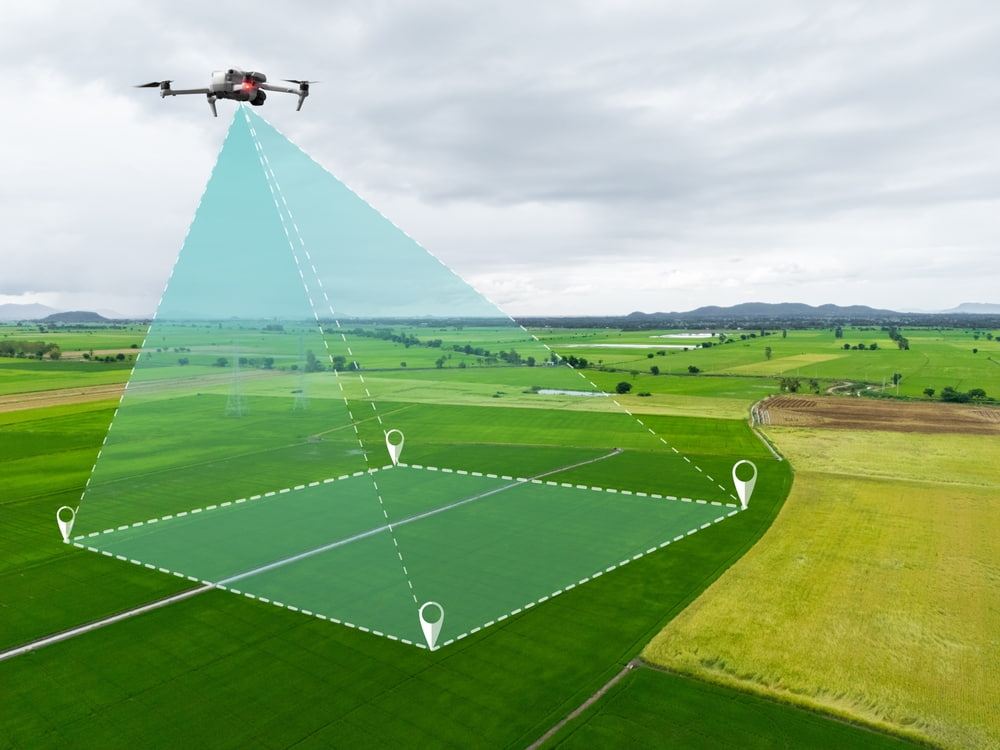
Agricultural AI uses labeled drone and satellite imagery for crop health monitoring, weed detection, yield estimation, and precision operations. Geospatial annotation extends to urban planning, infrastructure monitoring, and environmental analysis.
→ Legal and Compliance
Legal annotation includes contract clause classification, regulatory entity extraction, privilege review, and risk flagging. Legal language is dense, domain-specific, and high-stakes, meaning annotation errors can directly affect compliance outcomes.

The Human Side of Annotation
Who Are the Annotators?
The workforce behind annotation services includes full-time specialists, domain experts, managed teams, and crowd workers. The composition of the workforce has a direct impact on quality and consistency. Full-time specialists trained in specific domains deliver different results than general-purpose crowd workers, and the difference grows as task complexity increases.
Annotator Training and Domain Expertise
Domain knowledge matters as much as labeling speed. An annotator who understands what “stat” means in clinical notes or what “consideration” means in a contract produces better labels with fewer errors than one who knows the tooling but not the vocabulary. Strong annotation providers invest in domain-specific onboarding and ongoing training, not just platform orientation.
Ethical Considerations in Annotation Work
Fair wages, working conditions, and content exposure (especially for content moderation and safety labeling) are gaining visibility as important considerations in responsible AI development. Annotators who review toxic content, hate speech, and graphic material need wellbeing protocols, rotation schedules, and support structures. Buyers increasingly evaluate providers on how they treat their workforce, not just how they deliver labels.
Data Security and Compliance in Annotation
Why Security Matters More Than Most Teams Realize
Annotation involves giving a third party access to your raw data, which often includes PII, proprietary content, or sensitive operational information. The risk surface is real, and it grows with the sensitivity of the data and the number of people who access it.
Key Certifications and Standards
Depending on the industry, relevant certifications include SOC 2 for general security posture, ISO 27001 for information security management, HIPAA for healthcare data, GDPR for European user data, and TISAX for automotive. Ask for documentation, not just claims. Providers who hold these certifications have invested in the infrastructure to protect data.
Practical Security Controls
Role-based access controls, data encryption in transit and at rest, annotator NDAs, audit trails, data retention policies, and on-premise or dedicated cloud processing for sensitive projects. Evaluate your annotation provider’s security posture early in the vendor selection process.

The Future of Annotation Services
Foundation Models and the Shifting Role of Human Annotation
Foundation models are changing how annotation gets done. Pre-labeling, where a model generates draft annotations that human annotators review and correct, is becoming standard practice. Active learning approaches let models identify which examples are most valuable to annotate next, reducing total volume. The result is a shift in the annotator’s role: less rote labeling, more review, correction, and expert judgment on the cases that automated approaches get wrong.
RLHF, Red Teaming, and Alignment-Focused Annotation
The rise of LLMs has created an entirely new category of annotation work focused on model behavior rather than model accuracy. RLHF requires human annotators to rank model outputs by quality, helpfulness, and safety. Red teaming, the practice of deliberately trying to make a model produce harmful or incorrect outputs, depends on skilled human evaluators. These tasks demand a different annotator profile: people who can evaluate nuanced language, understand safety considerations, and exercise consistent judgment across subjective assessments.
Synthetic Data: Where It Helps and Where It Doesn’t
Synthetic data, generated by simulation engines or generative models rather than collected from the real world, has gained traction for augmenting labeled datasets. It’s useful for generating rare scenarios, bootstrapping new projects, and filling gaps where real-world data is expensive to collect. But models trained primarily on synthetic data often struggle with real-world variability. For most production AI systems, synthetic data works best as a supplement to human-annotated real-world data, not a replacement.
The Annotation Service Provider of the Future
As automation handles more routine labeling, annotation providers are evolving. The providers that will matter most are those that combine platform automation with deep domain expertise, structured QA, and the ability to handle complex evaluation tasks such as RLHF, safety testing, and red teaming alongside traditional labeling. Less commodity labeling, more specialized knowledge work.

Partner With iMerit to Power Your AI With Expert Annotation
iMerit’s data annotation services span every major data modality: image, video, text, audio, LiDAR, and multi-modal. Our domain-trained teams work across the full spectrum of annotation complexity, from high-volume classification and object detection to RLHF preference ranking, red teaming, and safety evaluation for LLMs.
Backed by our AI platform, Ango Hub, and certifications including SOC 2, ISO 27001, HIPAA, GDPR, and TISAX, iMerit has processed 250M+ data points for teams building AI in autonomous vehicles, healthcare, financial services, agriculture, robotics, and beyond.
Contact iMerit to discuss your annotation requirements.
Frequently Asked Questions
What are annotation services in AI and machine learning?
Annotation services are the professional labeling of raw data (images, video, text, audio, 3D point clouds) with structured tags that machine learning models use to learn patterns and make predictions. The quality of these annotations directly determines model performance.
What is the difference between data annotation and data labeling?
In practice, these terms are used interchangeably. Some practitioners use “labeling” for simpler classification tasks and “annotation” for more complex spatial or structural markup. Both describe the process of adding structured information to raw data for ML training.
What types of data can be annotated?
The most common types include images, video, text, audio, 3D point clouds (LiDAR), and multi-modal combinations. Each modality has its own annotation methods, tooling requirements, and quality considerations.
How much do annotation services cost?
Costs vary depending on data type, annotation complexity, domain expertise required, quality standards, and volume. Providers typically offer per-task, per-hour, per-project, or managed retainer pricing. The cheapest per-unit rate is rarely the lowest total cost once you account for rework and quality overhead.
How do you measure annotation quality?
Common metrics include inter-annotator agreement (IAA) using Cohen’s kappa or Fleiss’ kappa, Intersection over Union (IoU) for spatial tasks, and error rates broken down by class.
What is inter-annotator agreement and why does it matter?
Inter-annotator agreement (IAA) measures how consistently multiple annotators label the same data. High IAA indicates clear guidelines and well-calibrated annotators. Low IAA usually points to ambiguous guidelines or insufficient training, not bad annotators. It’s the most important quality signal for subjective annotation tasks like sentiment analysis or RLHF.
Should I build an in-house annotation team or outsource?
In-house works for early R&D, tiny datasets, or classified data. For production-scale work, regulated domains, or domain-heavy projects, a full-service managed provider typically delivers better quality and throughput.
What security certifications should an annotation provider have?
At minimum, SOC 2 and ISO 27001. For healthcare data, HIPAA. For European user data, GDPR compliance. For automotive, TISAX. Ask for documentation and verify compliance before sharing sensitive data.
How do annotation services handle sensitive or regulated data?
Through role-based access controls, data encryption, annotator NDAs, audit trails, de-identification workflows (for medical or PII-containing data), and compliance with industry-specific regulations. Evaluate the provider’s security posture early in the vendor selection process.
What is the role of human annotation in the age of LLMs?
LLMs can reduce annotation effort through pre-labeling on simple tasks. For complex, subjective, or safety-critical work, human annotation remains essential. The trend is toward human annotators handling higher-judgment tasks (RLHF preference ranking, safety evaluation, red teaming, edge case review) while automated approaches handle routine labeling.
How long does a typical annotation project take?
A pilot batch typically takes one to two weeks. Production-scale projects can run for several months or on an ongoing basis, depending on volume and iteration cycles. Key factors include data complexity, annotation type, quality requirements, and how quickly the taxonomy stabilizes after calibration.
What industries use annotation services most?
The largest consumers include autonomous vehicles and robotics, healthcare and medical AI, financial services and insurance, retail and e-commerce, government and defense, agriculture and geospatial, and legal technology. Each has distinct requirements for annotation types, domain expertise, and regulatory compliance.