VLM
VISION-LANGUAGE MODEL (VLM) TRAINING DATA
VLM training requires precise grounding between visual inputs and language. iMerit delivers object and spatial grounding, visual reasoning, multimodal response evaluation, and domain-specific annotation for robotics and autonomous systems.

WHERE iMERIT SITS INSIDE THE PIPELINE
ANNOTATION CAPABILITIES
SCENE CAPTIONING & DESCRIPTION
Dense, accurate natural language descriptions of scenes and objects, labeled for completeness and factual grounding.
VISUAL QUESTION ANSWERING
Question and answer pairs covering perception, spatial reasoning, and causal reasoning, labeled against verified scene facts.
GROUNDED REASONING ANNOTATION
Chain-of-thought and reasoning traces labeled step by step, checking that each claim is actually supported by the scene.
DECISION EXPLANATION ANNOTATION
A vehicle’s driving decision translated into plain language for the passenger, labeled for accuracy against the actual perception and planning event.
ANGO HUB
MULTI-MODAL ANNOTATION PLATFORM FOR VLM REASONING
Most annotation vendors treat this as a captioning problem. Vision-language reasoning requires explanations checked against real scene state, not just fluent, plausible-sounding text.
SCENE CAPTIONING & GROUNDING
Natural language descriptions of a scene checked against what is actually present, not just what sounds plausible.
VISUAL QUESTION ANSWERING
Question and answer pairs spanning perception, spatial reasoning, and causal reasoning about a scene.
AI-ASSISTED PRE-LABELING
ML-generated initial captions and answers, reviewed and corrected by domain-trained human annotators before delivery.
AUTOMATED QA RULES
Configurable validation checks catch hallucinated details and ungrounded claims before data exits the pipeline.
DATA CAPABILITIES
Every layer a vision-language model needs to see, reason, and explain.
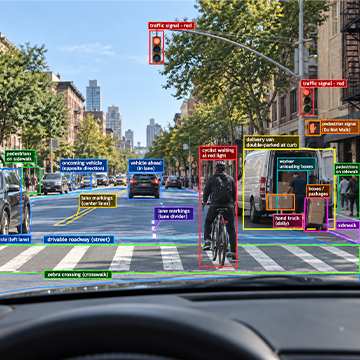
SCENE CAPTIONING & DESCRIPTION
Dense, accurate natural language descriptions of scenes and objects, labeled for completeness and factual grounding.
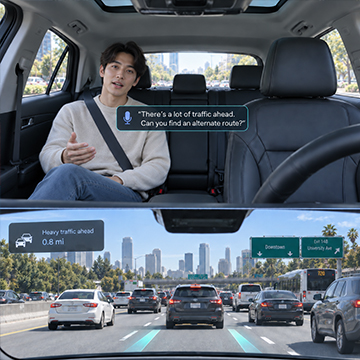
VISUAL QUESTION ANSWERING
Question and answer pairs covering perception, spatial reasoning, and causal reasoning, labeled against verified scene facts.
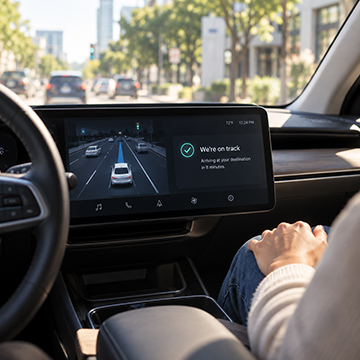
DECISION EXPLANATION ANNOTATION
A vehicle’s driving decision translated into plain language for the passenger, labeled for accuracy against the actual perception and planning event. The same discipline applies to any system that needs to explain itself.
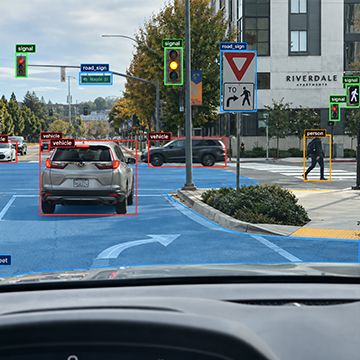
GROUNDED REASONING ANNOTATION
Chain-of-thought and reasoning traces labeled step by step, checking that each claim is actually supported by the scene.
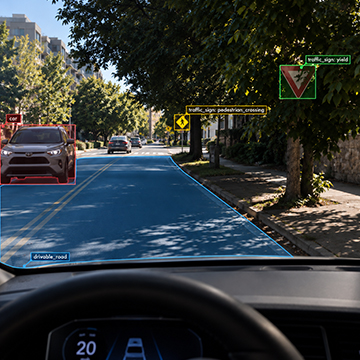
HALLUCINATION & ERROR LABELING
Ungrounded, fabricated, or contradictory model outputs identified and labeled for retraining and evaluation benchmarks.
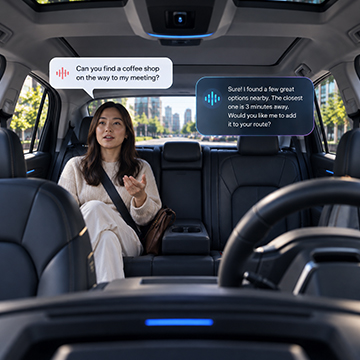
MULTI-TURN VISUAL DIALOGUE
Extended visual conversations labeled for consistency, grounding, and helpfulness across multiple turns, not just single responses.
CASE STUDY
VISION-LANGUAGE-ACTION MODEL FOR AUTONOMOUS MOBILITY
The client needed a unique dataset representing human driving styles, rules of the road, and how to interact verbally with passengers, built to a tight demonstration deadline after their prior data provider could not keep up. iMerit’s autonomous vehicle domain experts classified driving conditions, objects, and environmental abnormalities across thousands of real and synthetic scenarios, giving the model what it needed to explain its actions more clearly to the vehicle operator.
50%
IMPROVEMENT IN TIME PER TASK
95%
CLASSIFICATION ACCURACY
AHEAD
Use Cases
BUILT FOR THE VLM ANNOTATION PIPELINE
Every program maps to a real data challenge vision-language teams are solving right now, from captioning to hallucination detection.
VEHICLE EXPLANATION DATASET
Vehicle behavior translated into language and labeled for accuracy against the perception and planning stack, rider-facing for robotaxis and operator-facing for trucking fleets that need an auditable explanation after the fact.
IN-CABIN VISUAL QUESTION ANSWERING
Question and answer pairs about the driving scene and vehicle state, spanning perception, spatial, and causal reasoning for passenger and operator queries.
DRIVING EXPLANATION HALLUCINATION DATASET
Ungrounded and fabricated driving explanations identified and labeled, turning failure cases into retraining and evaluation signal.
IN-CABIN DIALOGUE DATASET
Extended in-cabin conversations labeled for consistency and grounding across turns, supporting robotaxi and personal AV assistant training.
INDUSTRY VERTICALS
Built for every automotive team whose model needs to see, reason, and explain to the people inside the vehicle. Building this for robots instead? See our Robotics pages.
IN-CABIN & AUTOMOTIVE AI TEAMS
Passenger-facing assistants for robotaxi fleets and driving-explanation models that ground their answers in real vehicle state.
ROBOTAXI OPERATORS
Fleet operators needing passenger-facing explanations that ground every answer in real vehicle state.
AV FOUNDATION MODEL LABS
Frontier labs building and evaluating vision-language reasoning specifically for driving and in-cabin systems.
PERSONAL & CONSUMER AV OEMS
Automakers building in-cabin explanation layers for personal and passenger vehicles.
AUTONOMOUS TRUCKING OPERATORS
Scene understanding and explanation layers for autonomous trucking fleets, giving remote operators and safety reviewers an auditable account of why the model acted.
MODEL EVALUATION TEAMS
Teams benchmarking hallucination rate, grounding accuracy, and driving-explanation quality before deployment.
RIDE-HAIL & MOBILITY PLATFORMS
Aggregators and mobility platforms layering explanation and trust features on top of third-party AV fleets.
INSURANCE & REGULATORY BODIES
Insurers and safety regulators needing explainable, auditable driving decisions for risk assessment and certification.
WORKFORCE & QUALITY
DOMAIN EXPERTS, NOT CROWD WORKERS
The difference between a model that explains itself correctly and one that hallucinates is not tooling. It is whether your annotators can tell when an explanation is actually grounded in the scene.

FULL-TIME SALARIED TEAM
Not gig workers. iMerit’s annotators are permanent employees assessed at an 80%+ threshold before going live, and domain-trained on grounding and reasoning evaluation before touching your data.

2-STAGE QA WORKFLOW
Every program runs a dedicated production stage followed by a separate QA review layer. Errors caught before they reach your training pipeline.

STRUCTURED PILOT FIRST
Schema design, team selection, training, and a calibration batch, all before production scale. Quality validated against your acceptance criteria.

ENTERPRISE SECURITY
SOC 2 Type II · ISO 27001 · GDPR compliant. Full audit trails and strict access controls across every program.
WHY WORK WITH US
MANAGED GLOBAL WORKFORCE
Managed service that gives you a large, diverse global workforce for the real-world grounding and reasoning data VLMs need.
END-TO-END SOLUTION
From captioning to VQA and hallucination labeling, all in one solution so you can focus on model development.
QUALITY ASSURED
Rigorous training and QA processes with proven annotation protocols, so your model’s explanations are ones people can trust.
Frequently Asked Questions
What makes a VLM explanation actually grounded, instead of just fluent?
A fluent-sounding explanation is not the same as a correct one. iMerit annotates and validates that a model's captions, answers, and explanations are actually checked against real scene state, labeling and flagging anything that sounds plausible but is not actually supported by what is happening in the scene.
What kinds of scenes and explanations do you annotate?
We annotate driving scenes, in-cabin interactions, and other visual data your team provides, labeling captions, question-answer pairs, and plain-language explanations checked against the actual scene state.
Does iMerit collect the scene or video data itself?
iMerit annotates data your team already has. We can help source additional data in select cases, though that is not a core part of our service.
How do you catch hallucinated or ungrounded explanations?
Confby the underlying scene, catching hallucinated details before data ships.igurable validation checks and human review flag explanations that are not actually supported.
How does Ango Hub support VLM annotation workflows?
Ango Hub manages captioning, question-answer labeling, and explanation annotation in one governed workflow, with role-based access, built-in review steps, and exports aligned to your training and evaluation pipeline.
READY TO TRAIN
MODELS THAT EXPLAIN WHAT THEY SEE?
Share your model type, task scope, and scale targets. We will scope a pilot that proves grounding quality before production volumes.