Amazon Mechanical Turk permanently closes September 30, 2026. Teams with active HITs should begin MTurk migration now by inventorying workflows, separating general from expert tasks, rebuilding in Ango Hub, and matching contributors through iMerit Scholars. The migration is also an opportunity to improve annotation workflow quality, contributor qualifications, and data provenance beyond what MTurk offered.
Amazon Mechanical Turk will permanently close on September 30, 2026. Existing requesters can continue publishing HITs until the closure date, but teams with active workflows should begin migration now rather than waiting for the final days of service.

The good news is that moving away from MTurk does not have to mean rebuilding every workflow from scratch. A useful migration starts by separating two things MTurk bundled together: access to workers and the mechanism used to distribute work. Modern annotation workflows can improve both.
If you are still deciding which platform to move to, our guide to the best Mechanical Turk alternatives in 2026 breaks down what to look for in a replacement. And if you want to understand what the shutdown signals more broadly for human data quality, our analysis of why MTurk is shutting down is a useful starting point. This guide focuses specifically on the migration itself.
Step 1: Inventory Your Active MTurk Workflows
Create a list of the HIT types your organization currently runs. For each one, capture:
- Task instructions and examples
- Input and output formats
- Current qualification requirements
- Expected task volume
- Average completion time
- Acceptance and rejection criteria
- Gold-standard or known-answer tasks
- Review and adjudication rules
- Required contributor expertise
- Downstream systems that consume the results
Do not migrate blindly. Some legacy HITs may no longer need human labor at all, while others may deserve substantially stronger human expertise than they currently receive.
Step 2: Separate General Tasks From Expert Tasks
Ask what kind of human judgment each workflow actually requires.
A broad participant pool may remain appropriate for consumer research, surveys, preference collection, and straightforward general tasks. Specialized annotation is different. If a task requires medical knowledge, scientific reasoning, software expertise, engineering judgment, robotics knowledge, or another professional skill, contributor qualifications should become part of the workflow design.
This is where Scholars changes the model. Instead of starting with an anonymous crowd and attempting to filter it afterward, teams can build around contributors selected for relevant qualifications.
This distinction matters more than it did five years ago. As ML models take over routine annotation tasks, the work that remains for human contributors is increasingly the work that requires genuine expertise, and contributor qualifications need to reflect that.
Step 3: Rebuild the Task in Ango Hub
Translate the HIT into an annotation workflow rather than simply recreating the MTurk interface.
Import the source data, define the annotation task, reproduce the instructions and examples, configure the appropriate annotation interface, and establish review stages.
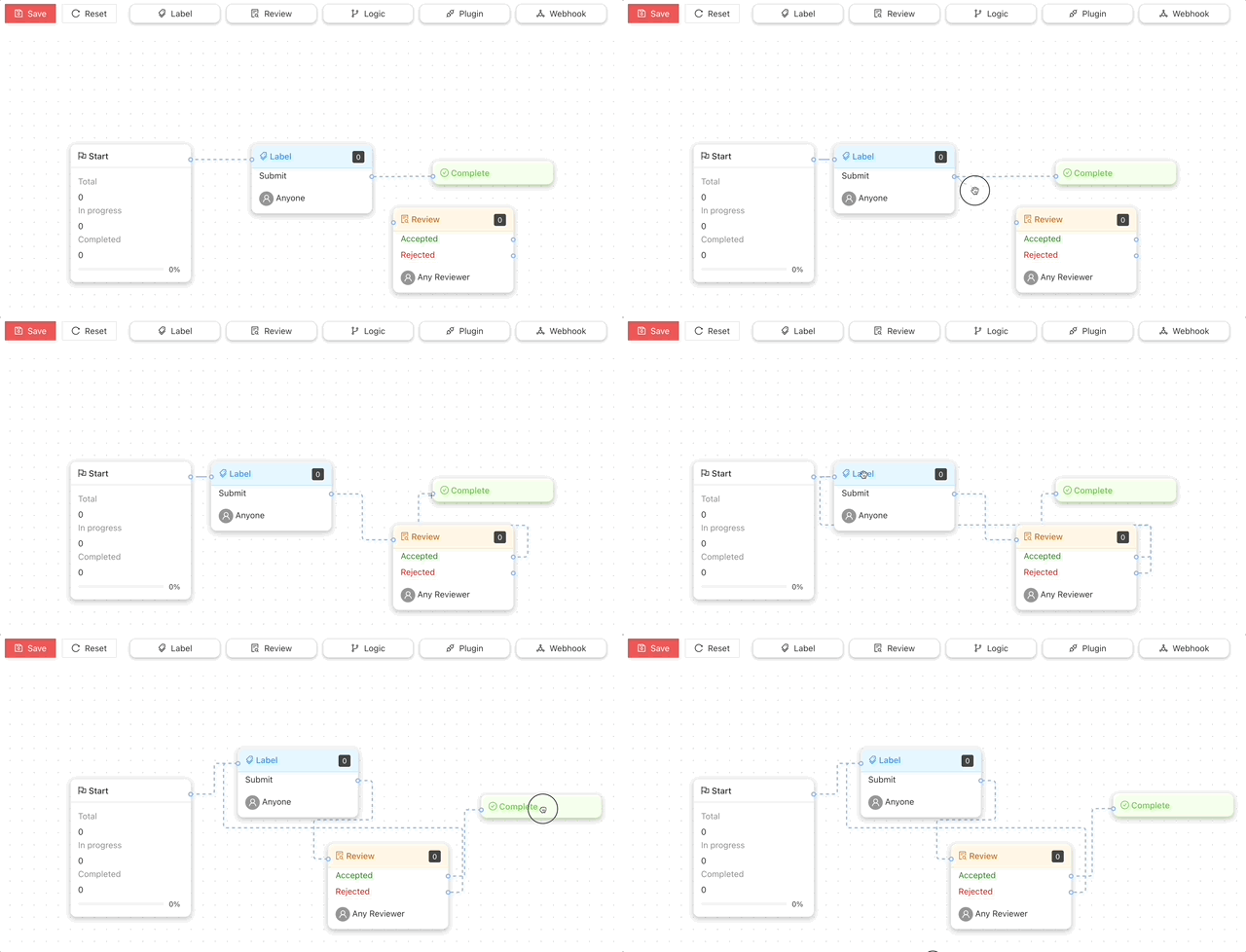
If you have existing annotation data to bring over, you will need to convert it to the Ango Hub import format.
This is also the moment to improve quality controls that may have accumulated informally around MTurk. Add qualification tasks, consensus or reviewer stages where appropriate, gold-standard examples, clear rejection criteria, and measurable contributor performance.
Ango Hub supports the full range of annotation types your MTurk workflows likely covered — text, image, video, audio, and more, within a single platform. Beyond the task interface itself, Ango Hub adds workflow automation, multi-stage review, contributor performance tracking, and a full audit trail. While MTurk did offer qualification requirements, gold-answer scoring, consensus review, and automated actions based on worker performance, Ango Hub consolidates these controls into a single managed workflow with contributor performance tracking and a full audit trail, making the resulting data more defensible at scale.
The goal is not to make Ango Hub look exactly like MTurk. The goal is to preserve the useful logic of your workflow while improving the infrastructure around it.
Step 4: Match the Workforce Through iMerit Scholars
Document the minimum qualifications required for contributors.
For general work, those requirements may be minimal. For expert annotation, specify the relevant field, experience, education, language, technical skills, or other qualifications needed to make a defensible judgment.
iMerit Scholars is designed for this part of the transition. The workforce becomes a deliberate component of data quality rather than an interchangeable pool attached to the task.
Where MTurk gave you access to a crowd, iMerit Scholars gives you access to credentials; a meaningful distinction when the work requires domain knowledge that an anonymous pool simply cannot guarantee.
Step 5: Pilot Before Scaling
Do not move the entire production workload on day one.
Run a representative batch through the new workflow and compare it with historical MTurk results. Evaluate completion time, agreement rates, reviewer intervention, rejection rates, contributor feedback, and downstream usefulness.
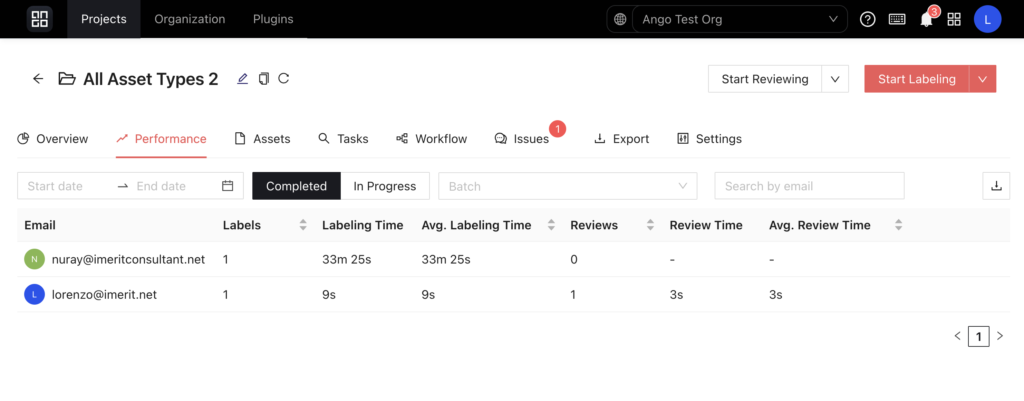
Use the pilot to identify unclear instructions or workflow friction before scaling volume.
A pilot also gives your team time to calibrate contributor qualifications against actual task requirements. What looks like a qualification gap on paper often surfaces during a pilot run and it is far better to catch that before scaling than after.
Step 6: Preserve What You Need from MTurk
Amazon says transaction history will remain accessible until January 28, 2027, but teams should still preserve operational information they may need later.
Export or document task templates, qualification logic, instructions, known-answer examples, worker-management rules, historical quality benchmarks, and any internal scripts or integrations associated with the workflow.
Also review Amazon’s closure guidance for requester balances, final billing, pending HIT approvals, and bonuses. Requesters will retain a limited period after the September 30 closure for some administrative actions.
Step 7: Cut Over Deliberately
Once the pilot meets your requirements, establish a final date for new work to stop entering MTurk and begin entering the replacement workflow.
Monitor the first production batches closely. Keep the team responsible for the old workflow involved long enough to identify differences in task interpretation, quality, or throughput.
Migration Is Also an Opportunity
The easiest reaction to MTurk’s closure is to search for another marketplace that behaves exactly like MTurk. That may be appropriate for some workloads. But for AI data, the better question is whether a workflow designed around anonymous microtask labor is still the right architecture.
Ango Hub + Scholars combines the two pieces many AI teams now need: an annotation and quality-management platform, and access to qualified human contributors.
If you have an existing MTurk workflow, you do not need to begin with a blank page. Start with the HITs, instructions, qualification rules, and quality controls you already have. Those can become the blueprint for a stronger post-MTurk workflow.
The organizations that treat this migration as a workflow audit, not just a platform swap, are the ones most likely to come out of it with better data, stronger contributor qualifications, and a more defensible annotation workflow than they had before.
MTurk closes September 30. The best time to test that transition is before your existing workflow disappears.
Explore Ango Hub and iMerit Scholars.