VLM + VLA
FAST, SCALABLE, HUMAN-VERIFIED ROBOTICS TRAINING DATA
From raw robot logs to training-ready episodes, iMerit runs the full VLM and VLA data pipeline, with model pre-labeling accelerating curation, segmentation, and captioning and expert annotators verifying every label along the way.
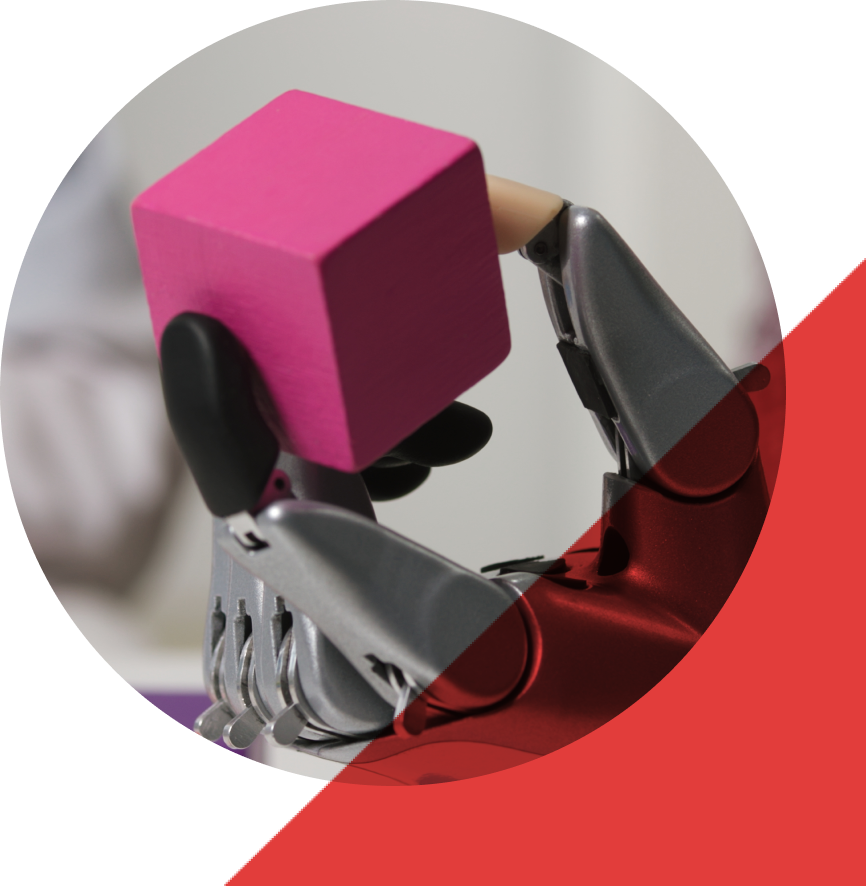
MODEL-ASSISTED LABELING
MODEL OUTPUT, HUMAN JUDGMENT
iMerit is introducing model pre-labeling into robotics workflows where it improves throughput. Trained annotators review all model output, and every label passes human QA before delivery.
SPEED
MODEL PRE-LABELING
- Proposed captions, action boundaries, and quality flags on selected workflows.
- Clip ranking to help prioritize annotation effort.
- Designed to support higher data volumes.

HUMAN REVIEW
ON EVERY
DELIVERED LABEL
Model output is always checked by a person.
QUALITY
HUMAN REVIEW
- Domain-trained annotators review, correct, or reject model output.
- A separate QA team reviews work before delivery.
- Full-time staff rather than crowd workers.
THE PIPELINE
A FIVE-STEP WORKFLOW FOR ROBOT VIDEO DATA
Programs can begin at any stage. Each step is handled by annotators with robotics experience, and model pre-labeling is applied where it improves throughput.
01
CURATE
Clips are ranked by training value to focus annotation on the most useful footage.
MODEL + ANNOTATOR
02
SEGMENT
Model-proposed action boundaries are reviewed and adjusted by annotators to frame-level accuracy.
MODEL + ANNOTATOR
03
DESCRIBE
Each action segment receives a plain-language caption, reviewed against the source video.
MODEL + ANNOTATOR
04
LABEL ACTION
Robot motion and grasp data are labeled and linked to the corresponding task instruction.
ANNOTATOR-LED
05
CURATE
Episodes are reviewed against collection guidelines to identify invalid or off-protocol recordings.
TWO-STAGE REVIEW
DATA CAPABILITIES
EVERY LAYER A ROBOT MODEL NEEDS TO SEE, REASON, AND ACT.
FOR VLMs · SEE AND REASON
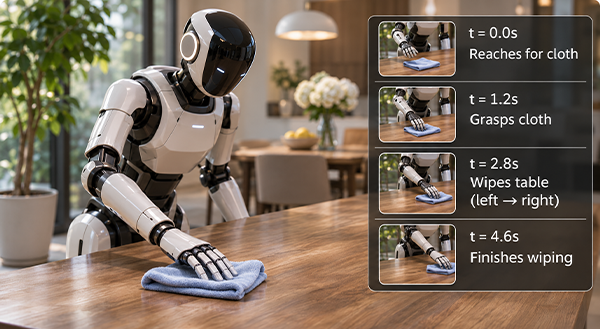
ACTION CAPTIONING & DESCRIPTION
Dense, plain-English descriptions of each action segment, grounded to the objects, contacts, and robot state visible in the video.

OBJECT & AFFORDANCE GROUNDING
Objects, parts, and graspable regions labeled with boxes, masks, and keypoints, and linked to the words in the instruction that refer to them.
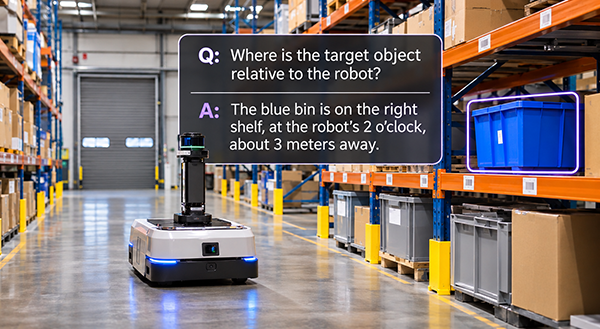
VISUAL QUESTION ANSWERING & REASONING
Question and answer pairs and step-by-step reasoning traces about task state, object relations, and next actions, checked against verified scene facts.
FOR VLAs · ACT
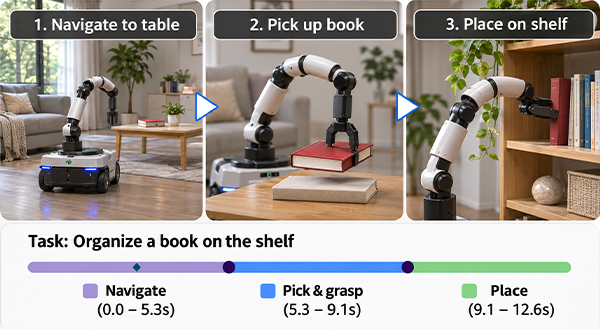
LONG-HORIZON TASK SEGMENTATION
Multi-step tasks broken into subtasks and action phases, each with start and end times and a language label for the subgoal, synchronized across camera views.
TRAJECTORY, POSE & GRASP LABELING
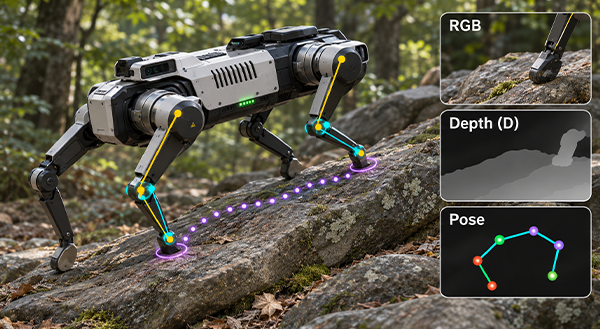
End-effector poses, joint states, gripper events, and grasp types labeled frame by frame across multi-view RGB-D and aligned to the task instruction.
SUCCESS, FAILURE & RECOVERY LABELING
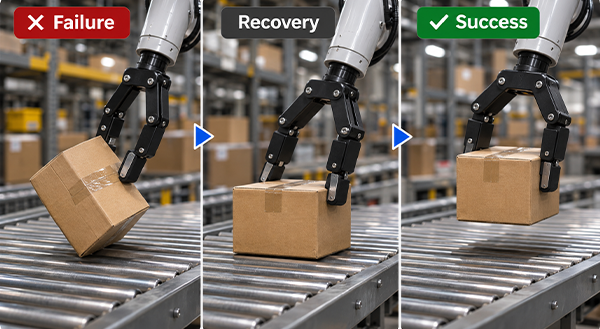
Each episode and subtask labeled as successful, partially successful, or unsuccessful, with the failure cause and recovery behavior tagged at the exact timestamp.
CASE STUDY
HUMAN-CENTERED ROBOT TRAINING
The client sought a partner to coordinate 200 hours of in-home task recording using Meta Quest 3 head-mounted cameras worn by participants completing daily activities. The raw footage needed extensive structure: classification of 9 core household task types, 37 sub-classifications, and precise tracking of objects, motions, outcomes, and contextual cues.
200
HOURS OF HOUSEHOLD TASK FOOTAGE
9
TASK CATEGORIES
100%
DATASET CONSISTENCY
HOW A PILOT RUNS
FROM SAMPLE TO SCALE
No long ramp. Pilots deliver labeled data on real robot logs before any volume commitment.
STEP 1
SAMPLE AND TAXONOMY
Clips are ranked by training value to focus annotation on the most useful footage.
STEP 2
WE CALIBRATE
We agree a labeling spec, train the team, and run a calibration batch with pre-labels and full human review.
STEP 3
REVIEW, THEN SCALE
We report quality against agreed acceptance criteria. At scale, the team grows with data volume.
WORKFORCE & QUALITY
DOMAIN EXPERTS, NOT CROWD WORKERS
Pre-labeling sets the pace of a program. Accuracy comes from annotators who understand what a correct action boundary, caption, or trajectory looks like.

FULL-TIME SALARIED TEAM
Not gig workers. iMerit’s annotators are permanent employees, assessed at an 80%+ threshold before going live and trained on robot video before production work begins.
2-STAGE QA WORKFLOW
Every program runs a dedicated production stage followed by a separate QA review layer, so errors are caught before data reaches a training pipeline.

STRUCTURED PILOT FIRST
Schema design, team selection, training, and a calibration batch all happen before production scale, with quality validated against agreed acceptance criteria.

ENTERPRISE SECURITY
SOC 2 Type II · ISO 27001 · GDPR compliant. Full audit trails and strict access controls across every program.
WHY WORK WITH US
MANAGED GLOBAL WORKFORCE
Managed service that gives you a large, diverse global workforce for the real-world grounding and reasoning data VLMs need.
END-TO-END SOLUTION
From captioning to VQA and hallucination labeling, all in one solution so you can focus on model development.
QUALITY ASSURED
Rigorous training and QA processes with proven annotation protocols, so your model’s explanations are ones people can trust.
Frequently Asked Questions
What makes VLM and VLA training data different from standard video annotation?
VLM and VLA training requires video linked to language and action, not just labeled frames. iMerit annotates captions grounded in the scene, action boundaries in time, and trajectories matched to the instruction being carried out, structured for both perception and control.
What kinds of robot data does iMerit annotate?
Multi-camera and head-mounted video, teleoperation and demonstration recordings, multi-view RGB-D, and robot state and control logs, with trajectories and grasps labeled frame by frame across robot arms, mobile robots, and humanoids.
Does iMerit collect or source robot data itself?
Yes. iMerit coordinates real-world video collection across multiple geographies and working conditions, including recording setup, quality checks, and ingestion. iMerit also annotates data that robotics teams already have.
How is quality maintained when models pre-label the data?
Model pre-labels are treated as drafts. Domain-trained annotators review every label, a separate QA team checks the work before delivery, and expert reviewers resolve ambiguous edge cases.
How fast is turnaround?
Turnaround depends on volume and task complexity. Pre-labeling shortens the first pass, and the annotation team is sized to data volume. A turnaround estimate is provided after the calibration batch, before any volume commitment.
How does Ango Hub support VLM and VLA annotation workflows?
Ango Hub manages segmentation, captioning, trajectory labeling, and QA in one governed workflow, with model pre-labeling, role-based access, built-in review steps, and exports aligned to training and evaluation pipelines. iMerit can also work inside existing customer tools.
READY TO TRAIN
MODELS THAT SEE, REASON, AND ACT?
Share the robot platform, task scope, and data volume. iMerit will scope a pilot that demonstrates labeling quality before production volumes.