Teleoperations and remote supervision give robots a human safety net for the moments when autonomy hits its limits. A remote operator can step in, take control, or approve a maneuver that the onboard stack would otherwise refuse to attempt. The result is a robot that keeps working in messy, unpredictable environments instead of freezing up and waiting for a technician to arrive.
For perception teams focused on precision, that safety net is also a goldmine. Every intervention is a labeled edge case, captured in context, with a human decision attached. Feed those events back into training pipelines and your models learn faster, generalize better, and recover gracefully where competitors stall. Teleoperations is part autonomy insurance policy, part continuous perception upgrade.
Why Teleoperations Matter for Modern Robotics
Autonomy’s “Last Mile” Problem in the Real World
Most robotic applications work beautifully in demo conditions and struggle when reality intrudes. A delivery robot handles clean sidewalks but hesitates at a construction detour. A warehouse AMR reads standard pallets fluently but misreads a shrink‑wrapped bundle stacked at an odd angle. Perception teams know these long‑tail cases exist, but collecting enough examples to train past them can be slow and expensive.
Remote supervision closes that gap in real time. When the robot’s confidence drops below a threshold, a human supervisor reviews the scene and either confirms the plan, overrides it, or teleoperates through the obstacle. The robot keeps moving, the customer keeps their SLA, and the perception team gets a perfectly framed failure case delivered to the annotation queue.
From Fail‑Safe to Fail‑Operational
Older robotic systems were designed to fail safe, meaning they stopped moving when confused. That behavior is acceptable for a prototype and unacceptable for a fleet of a thousand units running a distribution center overnight. Fail‑operational design keeps the robot productive through uncertainty, and remote supervision is what makes fail‑operational practical without turning every robot into an overbuilt one‑off.
| Dimension | Fail‑Safe Design | Fail‑Operational Design |
|---|---|---|
| Response to uncertainty | Robot stops and waits | Robot continues under remote supervision |
| Fleet utilization | Drops with every exception | Stays high across shifts |
| Downtime profile | Frequent, technician‑dependent | Rare, resolved in seconds |
| Audit trail | Limited to onboard logs | Human decision recorded per intervention |
| Best‑fit stage | Prototype, single‑unit pilots | Production fleets, regulated environments |
A supervisor covering dozens of robots can triage exceptions in seconds. Fleet utilization climbs, downtime shrinks, and the organization stops paying for idle hardware. Equally important, compliance teams get a clean audit trail showing a qualified human reviewed any non‑routine decision, which matters enormously in regulated settings like healthcare logistics or public‑road autonomy.
How Human-in-the-Loop Teleoperations Actually Work
A modern teleoperations stack has three layers working together. The robot streams sensor data, including camera feeds, lidar point clouds, and state telemetry, to a low‑latency cloud relay. A supervisor workstation reconstructs the scene with overlays showing planned paths, detected objects, and confidence scores. Control signals travel back through the same channel, either as discrete approvals, waypoint nudges, or direct joystick input, for fine-motor tasks.
Latency budgets are tight. A warehouse AMR can tolerate a few hundred milliseconds of round‑trip delay, but a cobot assisting a human worker needs much less. Good systems degrade gracefully, falling back to local autonomy or a safe stop when the link weakens rather than sending stale commands. Operator interfaces also matter more than people expect, because a confused supervisor is worse than no supervisor at all. Clear visualization of what the robot thinks it sees, versus what a human actually sees, is often the difference between a good intervention and a bad one.
Building Data Workflows that Make Teleoperations Smarter Over Time
Every intervention should feed a learning loop. The moment a supervisor takes control, the system ought to log the full sensor snapshot, the autonomy stack’s planned action, the supervisor’s corrective action, and the outcome. That quartet is high-signal training data, far richer than anything you can synthesize, and it’s exactly the kind of input that powers imitation learning and human-in-the-loop reinforcement learning approaches now showing up in production robotics stacks.
Good workflows route these events automatically to an annotation pipeline where expert labelers refine bounding boxes, segmentation masks, or behavior labels before the data reaches model training. This is active learning in its most practical form, with the robot itself surfacing the samples most worth labeling instead of teams guessing which frames matter. Version control on datasets, clear taxonomy for intervention types, and quality assurance on every label keep the loop trustworthy. Over quarters, the intervention rate drops, the autonomy envelope widens, and the cost per mile or per pick falls in step.
Teleoperations in Action: High-Impact Use Cases
Warehouse AMRs and Order Fulfillment
Autonomous mobile robots pulling totes through a fulfillment center run into dropped items, misplaced signage, and unexpected human traffic all shift long. Remote supervisors resolve these exceptions without dispatching floor staff, keeping throughput steady during peak.
Cobots on the Factory Floor
Collaborative robots handling assembly or inspection tasks benefit from remote expert review when parts vary outside trained tolerances. A specialist can validate a borderline weld or approve a non‑standard grip from anywhere, which is particularly useful for plants operating across time zones.
Outdoor and Cross-Domain Robots
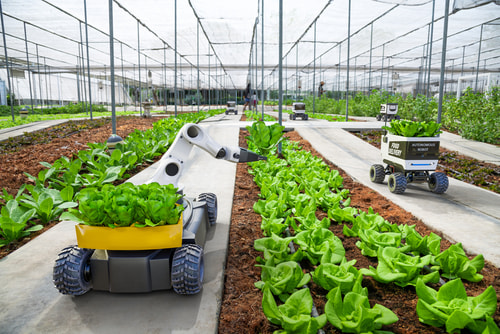
Sidewalk delivery robots, agricultural platforms, and inspection drones face weather, terrain, and regulatory conditions that resist full automation. Remote supervision is what lets these robotic applications operate commercially today, while the data they generate steadily expands what the autonomy stack can handle tomorrow.
Partner with iMerit to Operationalize Teleoperations Data for Robotics
Great teleoperations data is only as useful as the pipeline that turns it into better models. iMerit provides software‑delivered services for data annotation and model fine‑tuning by unifying automation, human domain experts, and analytics into a single workflow that your perception team can rely on. Our autonomous mobility solutions are built specifically for the demands of robotic applications, from multi‑sensor fusion labeling to rare‑event curation and intervention analysis.
Our annotation specialists, ontology designers, and QA analysts work inside your taxonomy, your quality bar, and your security requirements, so the data that reaches your training pipeline is already production‑ready. We scale with you from pilot to fleet, and we bring the domain depth needed to label the hard cases that move your metrics.
Contact our experts today to turn your teleoperations events into your next model upgrade.