Intent annotation helps enterprise voice AI systems move beyond accurate transcription by capturing what callers want, relevant entities, sentiment, behavior, outcomes, and escalation signals. Structured conversational data gives models the context needed to understand interactions, support workflows, make appropriate decisions, and improve performance through human-reviewed training and evaluation.
A voice AI system can transcribe every word a customer says and still misunderstand what. That distinction matters more as enterprises move from basic speech recognition to AI systems that can route calls, resolve requests, and take action. A 2026 Gartner survey found that 58% of customers who use GenAI have used it to complete a task on their behalf, not just to get an answer. Voice is no longer a side project for contact centers. It is becoming a core channel for automation.
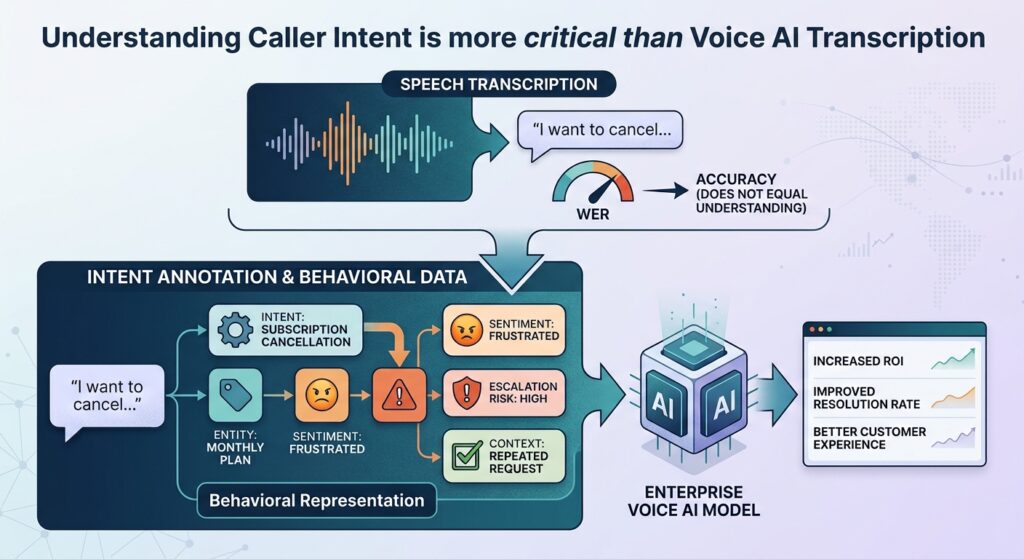
The challenge is that audio transcription captures the words, not necessarily the meaning behind them. A customer saying, “I’ve called twice about this charge” may express a billing intent, frustration, repeat-contact status, and elevated escalation risk at the same time. These signals determine how an AI system should respond.
For these systems, intent annotation adds the behavioral layer that transcription cannot provide. It labels what the customer wants, how they feel, and when an interaction requires escalation. High-quality voice AI training data therefore needs to capture conversational meaning alongside spoken words, which is where conversational AI annotation becomes important.
This article explains how intent annotation helps voice AI move from transcription to actionable understanding.
Why ASR Accuracy Is No Longer the Whole Problem
For years, voice AI development has focused heavily on automatic speech recognition (ASR). ASR converts the caller’s speech into text, while NLU processes that text to identify intent, entities, context, and the appropriate response or action. This separation makes each component easier to develop and evaluate, but it also creates a dependency: transcription errors can affect every downstream stage.
This is where Word Error Rate (WER) becomes an incomplete measure of voice AI quality. WER treats word-level errors largely the same, even though some errors have little effect on meaning while others can change the user’s request entirely. Amazon’s research on conversational voice assistants similarly found that WER does not fully capture the semantic impact of ASR errors.
Consider the statement, “I want to cancel.” The words may be transcribed perfectly, but the system still needs context to determine whether the caller wants to cancel an order, subscription, appointment, or something else. It may also need to recognize frustration, identify relevant entities, track the conversation state, and determine whether escalation is required.
That is why enterprise voice AI annotation must go beyond speech annotation and transcription. The training data should capture the information needed for the final decision. For example, what the caller wants, which entities matter, how they feel, what has already happened, and what action should follow. The goal is not simply to recognize words accurately. It is to build systems that understand conversations well enough to act correctly.
Intent Is the Missing Layer Between Speech and Action
Transcription tells a voice AI system what was said. Intent annotation adds context about what the caller wants and turns that information into structured data the system can use. This helps voice AI understand requests at the level needed for enterprise workflows.
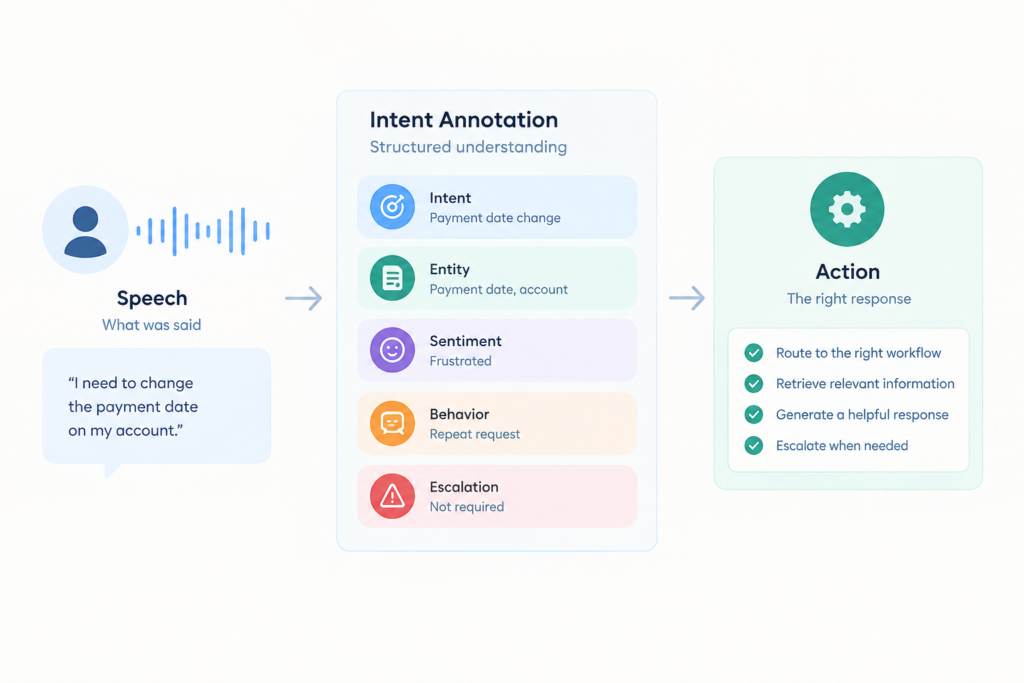
Intent, Entity, and Behavior Are Different Signals
Consider a caller saying, “I need to change the payment date on my account.”
- The intent is the requested outcome: changing the payment date.
- The entities identify the relevant information, such as the payment date and account.
- Behavior captures signals surrounding the request, such as repeated attempts to get help, frustration, urgency, or a potential need for escalation.
These signals serve different purposes. Intent recognition helps determine what the caller wants done. Entities provide the details required to complete that task. Behavioral signals help the system decide how to handle the interaction.
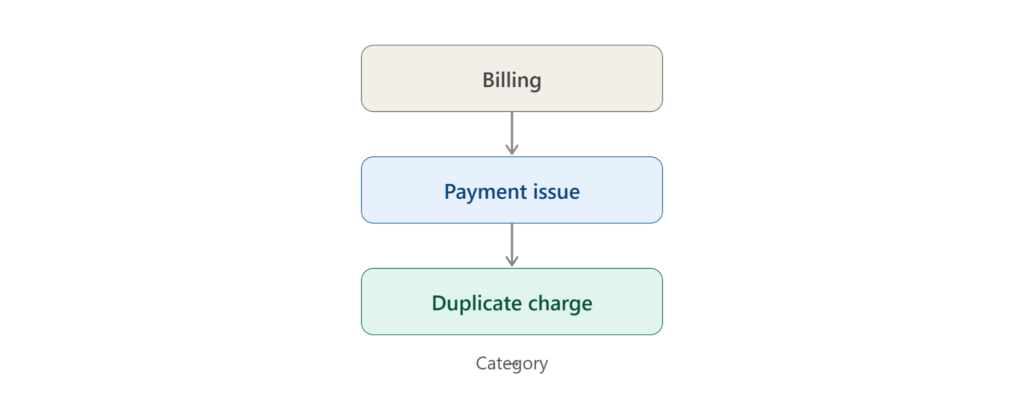
Intent labels also need to be specific enough to support an enterprise workflow. A broad label such as “billing problem” tells a system something is wrong but provides little direction for the next step. A more specific taxonomy could distinguish a duplicate charge as a type of payment issue within the broader billing category. This gives the model a clearer operational target and helps connect the intent recognition with the appropriate workflow, information retrieval, resolution path, or human handoff.
Recent research illustrates the scale and complexity involved. A 2025 EMNLP study built a Chinese customer-service intent dataset from more than 100,000 real calls, with 1,507 human-annotated intent clusters spanning general and domain-specific customer-service requests, including banking, telecommunications, and insurance.
Intent Exists Across the Conversation, Not Just One Utterance
Intent can also change as a conversation develops. A caller might initially ask about an unfamiliar charge, explain that they have already contacted support, and then ask to cancel the associated service. Treating each utterance as an isolated classification task can miss this progression.
Conversation-level annotation can capture the current intent, relevant history, and changes in the caller’s goal. This gives models the context needed to distinguish an initial question from the action the caller ultimately wants.
From Intent to Action
The operational value of intent annotation appears when the label connects directly to a workflow. A recognized intent can determine which workflow to activate, what information to retrieve, which action to perform, and how the system should respond. Intent annotation therefore becomes decision-making training data, linking conversational understanding to the actions an enterprise voice AI system must take.
The Behavior Annotation Layer That Makes Voice AI More Actionable
A behavior-aware dataset represents more than the caller’s primary intent. It captures the signals that explain how the interaction develops, how the caller responds, and how the conversation ends.
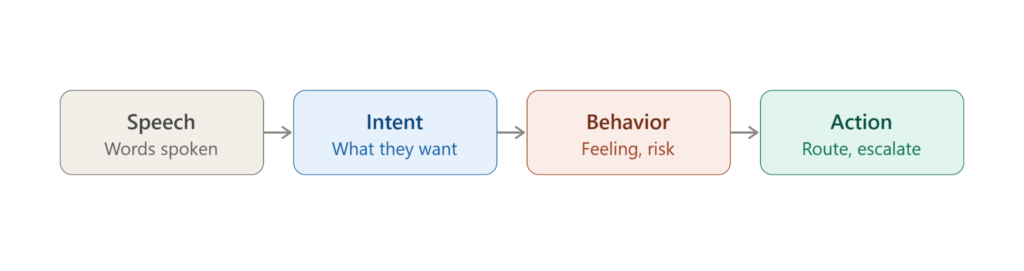
The following layers show how a voice conversation can be structured from what was said to what the caller wanted, how they behaved, and what happened next.
| Layer | What it captures | Example |
|---|---|---|
| Speech | What was said | “I need to change my payment date.” |
| Intent | What the caller wants | Payment-date change |
| Entity | Relevant information | Payment date |
| Sentiment | Emotional state | Frustrated |
| Behavior | What happens during the interaction | Repeats request |
| Outcome | How the interaction ends | Resolved |
| Escalation | Whether human intervention is needed | Human transfer |
These labels are not isolated metadata. Together, they create a behavioral representation of the conversation. The resulting voice AI training data or sentiment annotation can support systems responsible for routing, information retrieval, response generation, escalation, quality assurance, and model evaluation.
From Labels to Model Behavior
Why Multiple Signals Matter
A caller asking to cancel a service may have a straightforward intent, but the surrounding signals can change how the system should handle the request. Repeated requests, frustration, previous failed attempts, or an explicit escalation request provide context that a single intent label cannot capture.
Risk and Compliance Belong in the Same Layer
The same framework can capture signals that affect whether automation should continue. A conversation may contain sensitive personal information, a vulnerable-customer signal, or a high-risk request that requires additional controls or human review. Annotating these events gives the system explicit training and evaluation signals for changing its response, limiting automation, or escalating the interaction.
For teams building this type of dataset, iMerit’s Ango Hub audio workflow supports annotation across intents, entities, outcomes, behaviors, ASR, and voice AI evaluation. Its audio annotation tool also supports PII, compliance, and speaker-related annotation, allowing teams to capture operational and risk signals within the same conversational data.
What Enterprise Voice AI Looks Like When the Data Is Behavior-Aware
Behavior-aware voice AI becomes easier to understand when you look at systems operating at enterprise scale. Two examples show how structured conversational data supports different parts of the contact center AI lifecycle: semantic evaluation in production and human-reviewed data for improving downstream model performance.
DoorDash: Voice Automation Requires Semantic Evaluation
DoorDash broader contact center supports consumers, merchants, and Dashers, while the generative AI voice solution described in AWS’s case study was developed specifically to expand self-service for Dashers. DoorDash built a fully voice-operated generative AI solution for Dasher support and an evaluation framework that could run thousands of automated tests per hour. This increased testing capacity by 50x compared with its previous approach, while the framework also semantically evaluated responses against ground-truth data.
That semantic layer matters because a fluent response can still be incorrect or fail to address the caller’s actual problem. Ground-truth evaluation gives the team a way to assess whether the system’s response is relevant and useful, rather than relying on surface-level language quality alone. Following a successful test in early 2024, DoorDash rolled out the new self-service options to all Dashers.
Verbal + iMerit: Annotated Call Data Improved Compliance Detection
Verbal, a healthcare conversational intelligence platform, needed thousands of hours of transcribed calls audited and annotated to improve compliance detection and benefits verification. iMerit created a HIPAA-compliant workflow and produced ground-truth datasets that were used to train Verbal’s model for compliance detection and real-time coaching.
After training with the annotated data, the healthcare call center’s benefits-verification target increased from 11% to 67%. The case study describes this as a 56% improvement and reports an estimated $1.1 million in additional monthly revenue.
How to Build an Intent Annotation Workflow for Voice AI
A useful voice AI annotation workflow starts with the business decisions the voice system must support. From there, teams can define the right taxonomy, establish consistent labeling rules, and create a process that improves as new failure cases appear.
1. Start With the Decisions the Agent Must Make
Before defining labels, map the decisions the voice system must support. Determine which interactions require an answer, clarification, information retrieval, action, routing, escalation, or termination. These decisions define which intent distinctions are actually useful and prevent teams from creating labels simply because they are easy to identify.
2. Build a Domain-Specific Intent Taxonomy
Generic intent categories rarely provide enough detail for enterprise workflows. An insurance contact center, for example, may need to distinguish a billing problem involving a payment dispute and duplicate charge rather than grouping every case under Complaint.
The taxonomy should reflect the organization’s services, processes, and escalation paths. Keep categories distinct enough for downstream decisions without creating unnecessary labels that reviewers cannot apply consistently.
3. Define Behavioral Guidelines and Edge Cases
Annotation guidelines should explain how reviewers handle ambiguous intent, multiple requests in one utterance, intent changes across turns, sarcasm, indirect requests, polite expressions of frustration, code-switching, overlapping speech, and incomplete utterances.
These cases require judgment, so teams need to measure annotation consistency. iMerit’s NLP guidance recommends clear guidelines, multiple reviewers, agreement measurement, and adjudication for intent, sentiment, emotion, and related labels.
4. Combine Human Review With AI-Assisted Annotation
AI-assisted annotation can generate preliminary labels, flag disagreements, and prioritize samples for review. Human experts then verify difficult cases and resolve disagreements through adjudication. iMerit’s domain-expert services can support expert review where domain knowledge is required.
The objective is consistent ground truth at scale, rather than labeling as many calls as possible.
5. Feed Production Failures Back Into the Dataset
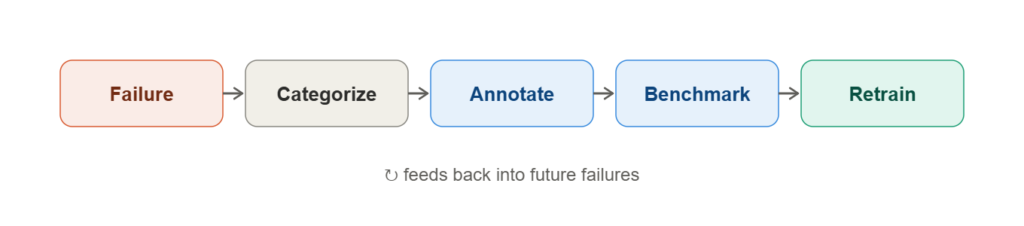
Production failures reveal gaps that a static dataset can miss. When a voice AI system mishandles an interaction, teams can categorize what went wrong, annotate the conversation, add the example to the training or evaluation dataset, and use it to test future model versions.
This turns annotation into a continuous improvement process. The dataset evolves around real failure patterns instead of remaining fixed after the initial labeling project.
Conclusion
As enterprises move from traditional IVR automation toward conversational and agentic voice systems, accurate transcription is only one part of the data challenge. Voice AI also needs structured information about what callers want, how interactions unfold, whether issues are resolved, and when human intervention is required.
Key takeaways
- Intent annotation connects conversational language to the decisions and workflows a voice AI system must support.
- Behavior, sentiment annotation, outcome, and escalation labels provide context that transcripts and WER alone cannot capture.
- Domain specific taxonomies and clear annotation guidelines help create consistent training and evaluation data.
- Human review combined with AI annotation can improve consistency and scale without removing expert judgment.
- Production failures should feed back into the dataset so the system can continue to improve against edge cases.
Ready to move beyond transcription? iMerit helps enterprise voice AI teams build structured, human-reviewed datasets for intent, behavior, outcomes, and conversational intelligence. Talk to iMerit about building the annotation workflow your voice AI program needs.