iMerit automates medical AI annotation through Ango Hub, combining no-code custom workflows, AI pre-labeling, Auto Suggestion for segmentation, and plugin-based quality control. Every automated step includes expert-in-the-loop validation, helping healthcare AI teams scale radiology, pathology, and clinical coding annotation accurately.
In healthcare AI, speed is important; but clinical accuracy, compliance, and explainability are essential. From radiology scans to multilingual documentation, data labeling workflows must be both efficient and auditable.

At iMerit, we combine automation with expert-in-the-loop validation to build annotation pipelines that scale without sacrificing quality. This is powered by our Ango Hub platform, which brings together custom workflows, AI-assisted labeling, auto-validation, and audit-ready review tools and more; all designed specifically for medical AI use cases.
Automation Starts with Workflow
Every annotation task has unique requirements. Some need multiple rounds of expert review. Others require automatic logic gates, plugin-based validations, or consensus scoring. Ango Hub’s configurable workflow system allows us to design custom, no-code pipelines that reflect exactly what the project needs; and nothing it does not.
These workflows can include:
- Conditional routing based on task outcomes
- Requeueing with or without annotations
- Plugin-powered validation
- Consensus tracking for subjective tasks
- Granular task priority assignment
- Integration with external systems via webhooks
In one transcription project, for example, we use workflow branching to direct audio files to different reviewers based on language and domain. In another imaging use case, 10% of the tasks automatically moved from initial annotation to a clinical auditor, then back for correction if thresholds are not met. This level of customization ensures consistency without creating bottlenecks.
Smarter Tools for Medical Annotation
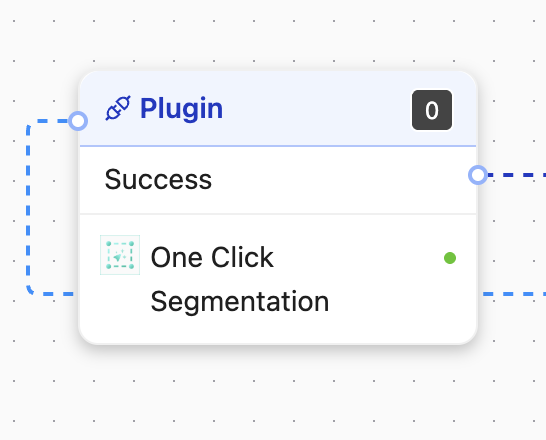
Pre-Labeling That Speeds Up Without Losing Control
Our automation tools include pre-labeling plugins that insert AI-generated annotations into tasks before human review. For segmentation or entity recognition, this can significantly reduce manual effort and boost consistency.
In a large oncology imaging project, AI models were utilized to produce first-pass tumor boundaries. Annotators then corrected or confirmed these predictions using built-in visualization tools, cutting turnaround time nearly in half while increasing inter-annotation agreement.
Smart Labeling Features for Complex Modalities
Medical annotation requires more than bounding boxes or checkboxes. Our smart labeling toolkit includes:
- OCR for structured text
- Adaptive brushes and grow tool for image segmentation
- Speed scissors and level tracing for precision regions
- Magnetic lasso and island detection in NRRD, and more
These tools are especially valuable in radiology, where precise boundaries are critical. For instance, a team working on CT scan annotation used the Magnetic Lasso and Tape Measure tools to segment and measure anatomical structures frame by frame with high precision and minimal friction.
Another automation-assisted feature is the Brush in Threshold Range, which allows annotators to confine brush strokes to a pre-defined intensity window. By automatically limiting the labeling area based on grayscale or density values, this tool reduces over-segmentation and ensures consistent application of clinical criteria.
With this automation built into the tool, annotators can work faster and more precisely, reducing manual adjustments and improving consistency across large datasets.
AI-Assisted Annotation with Auto Suggestion
Across medical AI workflows, annotators often need to create precise boundaries around complex objects. Auto Suggestion uses AI to assist with this process, generating segmentation suggestions that annotators can finalize with a single click.
For example, pathology annotation can involve thousands of individual cells, making manual segmentation both repetitive and time-consuming. Auto Suggestion brings AI assistance directly into the annotation workflow, helping experts identify and segment objects with minimal manual effort.
With Auto Suggestion enabled, annotators can move their cursor over a cell or other object and receive an AI-generated segmentation suggestion. A single click can then finalize the suggested annotation, allowing annotators to spend less time tracing boundaries and more time reviewing the accuracy of the results.
For pathology workflows, this creates a practical human-in-the-loop approach to automation. The AI assists with the repetitive work of identifying object boundaries, while the annotator remains in control; reviewing, correcting, and finalizing each annotation as needed.
Because the AI assistance runs locally in the browser, Auto Suggestion can support interactive annotation without sending the image data to a server for this processing. This combination of AI assistance and expert oversight helps make large-scale cell annotation faster while maintaining the level of precision required for medical AI datasets.
Real-Time Auto Quality Control with Custom Validation
Using post-labeling plugins, we are able to validate annotations against project-specific rules. These rules can be written in Python, JavaScript or connected to pre-trained models. If a label violates format or logic, it is automatically flagged, reassigned, or rejected.
This is especially useful in structured coding. For example, in an ICD coding task, we can implement plugins to detect incompatible code pairings and missing modifiers. Annotators can receive immediate feedback, improving precision and reducing rework during review.
Radiology Co-Pilot for Rule-Based Assistance
Radiology annotation presents complex decision paths; rules like BI‑RADS or Lung‑RADS include thresholds and descriptors that differ by modality and case. iMerit’s Radiology Annotation Co‑Pilot (a part of Ango Hub and now known as ANCOR) acts as a real‑time assistant, highlighting protocol requirements, flagging inconsistencies with guidelines and offering actions like re‑queueing uncertain cases.
In customer trials, our Co‑Pilot doubled output speed and improved annotation accuracy by 38%, all while keeping annotators aligned with guideline logic without slowing them down.
Built In Expert Oversight
Automation at iMerit is never a replacement for expertise, it is a framework for experts to work more efficiently and accurately. Every automated workflow includes expert-in-the-loop validation, layered review stages, and ongoing feedback.
Reviewers and team leads monitor contributor performance real-time dashboards that track:
- Task accuracy
- Guideline compliance
- Reviewer disagreement
- Correction trends over time
If issues arise, they trigger retraining, requeueing, or calibration workflows. This closed-loop approach ensures that automation never gets ahead of quality.
Smarter Healthcare AI Starts with Smarter Annotation
AI can only be as good as the data it learns from. With iMerit’s automation capabilities, you’re not just speeding up workflows; you’re ensuring every label, every annotation, and every validation is rooted in clinical relevance and quality control.
Let our tools help you build the next breakthrough in healthcare AI faster, safer, and smarter.
Schedule a Demo or Contact Us to explore how iMerit can accelerate your annotation workflows with automation.