
1M+
Images annotated
184+
Plant types identified
500K/hour
Weeds eliminated (enabled performance)
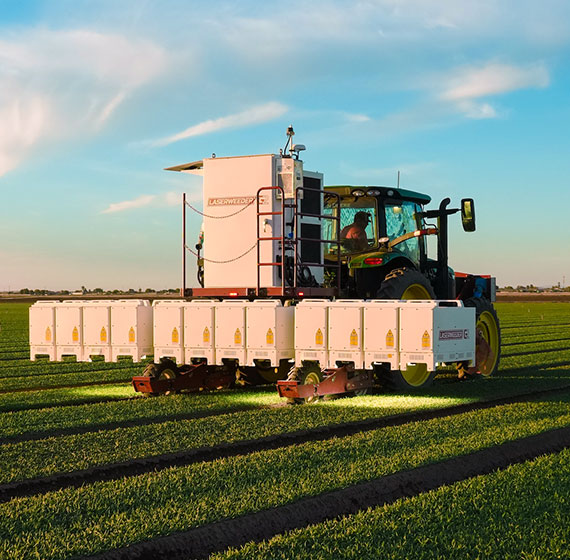
Carbon Robotics set out to revolutionize agriculture with its LaserWeeder—an AI-powered system that uses computer vision and lasers to eliminate weeds with sub-millimeter precision. The system required highly accurate identification of crops versus weeds in diverse, real-world farming environments.
Early in the product lifecycle, the challenge was significant: training machine learning models to distinguish between visually similar plant types across crops, geographies, and growth stages. Traditional approaches required constant retraining for each new crop or weed type, slowing deployment and limiting scalability.

Additionally, the system needed to operate in real time, meaning errors in classification could directly impact crop yield. Carbon Robotics required a scalable, high-quality data annotation pipeline and ongoing model validation to support rapid iteration and field performance improvements.
“To target weeds with sub-millimeter accuracy, the system must deeply understand plant structures across hundreds of crop and weed types at every stage of growth”
- Zach New, Manager Deep Learning
Carbon Robotics
iMerit partnered with Carbon Robotics beginning in 2020, initially supporting a small proof-of-concept with five specialists. Over time, the engagement scaled into a mature, multi-year collaboration with over 80 trained experts supporting data operations.
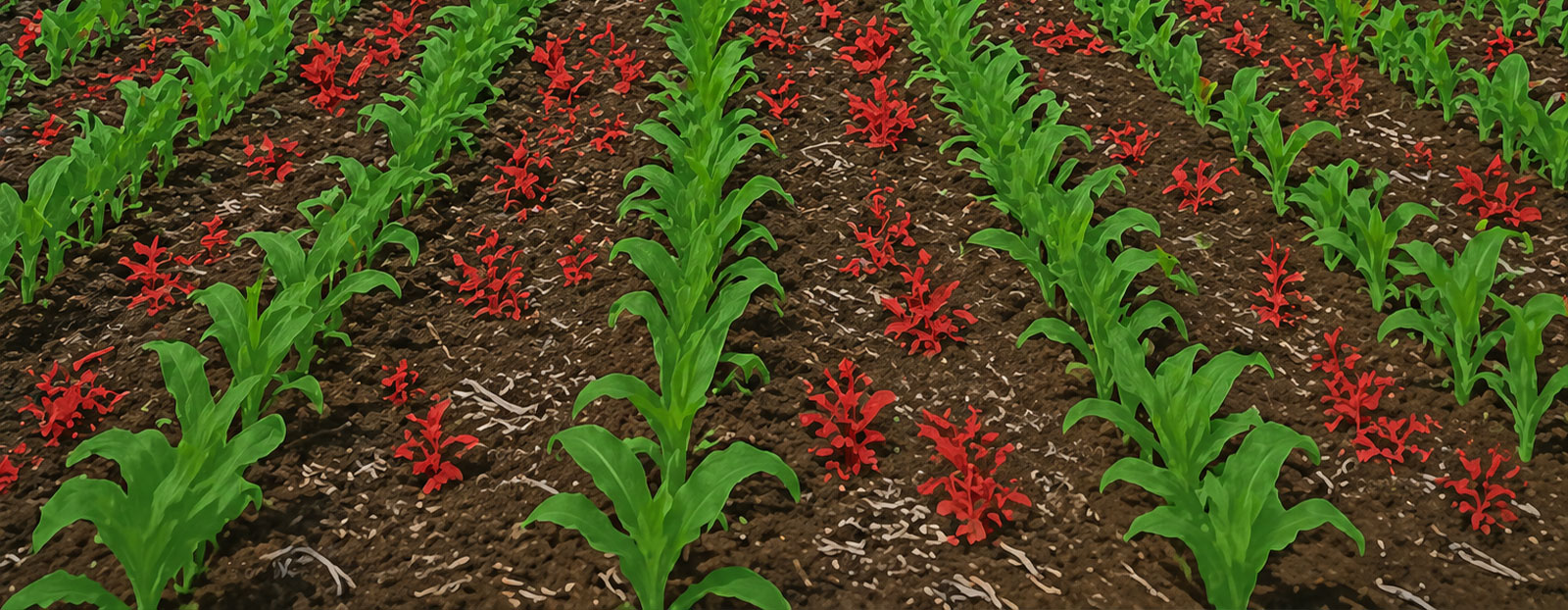
The core of the solution focused on high-precision image annotation. iMerit teams labeled plant images by identifying and marking the exact center point of crops and weeds—critical for guiding the laser targeting system.
Annotation evolved from polygon-based labeling to advanced keypoint and circular annotations, improving both speed and accuracy.
To support scale and complexity:
As the engagement matured, iMerit expanded beyond labeling into real-time monitoring (triage). Operators began reviewing live machine outputs, identifying detection errors, and flagging issues in active field operations. This human-in-the-loop feedback loop allowed Carbon Robotics to continuously refine system performance in production environments.
This data foundation ultimately supported the development of Carbon Robotics’ large plant model, trained on millions of labeled images across farms and geographies. The model reduced the need for retraining on new plant types, dramatically improving scalability and deployment speed.

iMerit’s partnership enabled Carbon Robotics to scale from early-stage experimentation to a highly advanced AI-driven agricultural solution.
Over the course of the engagement:
These advancements contributed directly to the performance of the LaserWeeder, which can eliminate up to 500,000 weeds per hour while preserving crops and reducing reliance on herbicides.
By combining high-quality data, scalable operations, and continuous feedback loops, iMerit helped Carbon Robotics transition from iterative model training to a generalized plant intelligence system capable of operating across diverse agricultural environments.