Amazon Mechanical Turk shuts down September 30, 2026. Organizations relying on it for annotation and research should evaluate alternatives based on contributor expertise, quality control, and provenance, options like iMerit Ango Hub and iMerit Scholars offer qualified contributors paired with dedicated annotation and QA tooling.
Amazon Mechanical Turk will permanently close on September 30, 2026. For organizations that still rely on MTurk for research, data collection, annotation, evaluation, or other Human Intelligence Tasks, the immediate question is simple: what replaces it?
The answer depends on what you were actually using MTurk to accomplish.
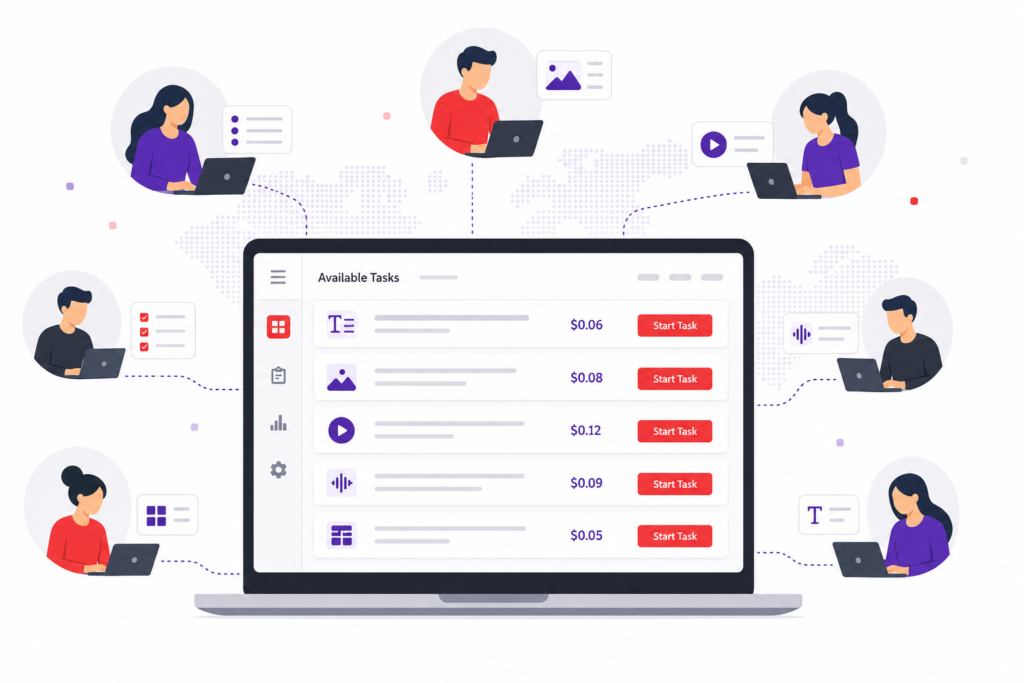
MTurk was unusually flexible. Requesters could define a task, publish it to a broad labor marketplace, collect responses, and build their own quality-control process around the results. That flexibility made MTurk useful for everything from surveys and transcription to data labeling and research.
But the market around human data has changed. Many AI teams today do not simply need more people completing tasks. They need reliable contributors with identifiable skills, stronger quality controls, and annotation tooling designed for modern AI workflows.
What Should You Look for in an MTurk Alternative?
Before choosing a replacement, consider four questions.
1. Who needs to perform the work?
For simple surveys or general-purpose tasks, a broad participant pool may still be appropriate. For specialized AI data, however, contributor qualifications can be much more important. Medical, scientific, engineering, coding, robotics, legal, and other domain-specific tasks often require people who understand the subject matter.
A generalist crowd can still complete these tasks. But completion isn’t the same as correctness. A contributor without domain background may label something wrong with total confidence, and the error won’t surface until the model trained on it fails.
2. How will you verify quality?
MTurk gave requesters substantial control, but it also left much of the quality-assurance process to them. Modern data workflows may require qualification tests, reviewer layers, consensus mechanisms, audit trails, and measurable contributor performance.
Without these layers, quality control becomes reactive. A requester finds bad data only after outputs are reviewed, or after a model has already trained on it. Building qualification tests and consensus scoring from scratch takes time most teams haven’t budgeted for.
3. Do you need software, or both?
A workforce marketplace solves only part of the problem. AI teams frequently need an annotation environment, workflow management, QA, project visibility, and a workforce capable of completing the work.
Stitching these together from separate vendors adds overhead. Sourcing from one platform, managing tasks in another, running QA in a third, with no shared audit trail between them. Every handoff is a place where context can get lost.
4. How important is provenance?
Generative AI has made it harder to assume that work submitted through an anonymous online marketplace was actually produced by a human. A 2023 study of one MTurk summarization task estimated that 33 to 46 percent of participants used large language models. The authors cautioned that the finding may not generalize to other tasks, but it illustrates an important new requirement: teams increasingly need to know who produced their data and how it was produced.
This isn’t just a research problem. If an LLM produces the “human” annotation, the model ends up training on an imitation of itself rather than genuine human judgment, defeating the purpose of collecting the data at all.
Types of MTurk Alternatives
General Crowdsourcing and Research Platforms
Platforms built around broad participant pools can be a good fit for surveys, behavioral research, consumer feedback, and relatively general tasks. They preserve much of the accessibility that made MTurk useful.
The tradeoff is that general crowds are not always the right fit for specialized annotation or evaluation work.
Managed Data-labeling Providers
Managed labeling companies can take more responsibility for workforce operations and delivery. This can be useful for organizations that want to outsource a complete annotation project rather than manage individual contributors themselves.
The tradeoff can be reduced flexibility, higher cost, or less direct control over how the workforce is assembled.
Expert Networks
For tasks where expertise determines data quality, an expert network can be more appropriate than an anonymous crowd. Instead of optimizing primarily for the number of available workers, these systems focus on identifying contributors with relevant backgrounds and qualifications.
This is the model behind iMerit Scholars.
iMerit’s Ango Hub + Scholars: tooling and expert contributors in one workflow.
Scholars is designed around a simple idea: when the task requires expertise, the identity and qualifications of the person producing the data matter.
Ango complements that workforce with the annotation and quality-management layer. Instead of recreating an MTurk workflow by combining a labor marketplace with separate annotation infrastructure, teams can use Ango for annotation and QA while sourcing qualified contributors through Scholars.
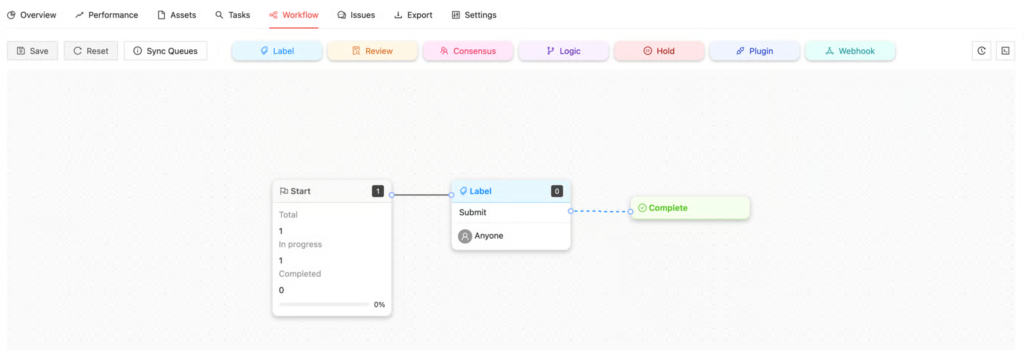
In practice, this means a requester defines a task the way they would on MTurk. But instead of publishing it to an open pool, the task routes to contributors who have been vetted for the relevant domain, whether that is medicine, mathematics, coding, or another specialized field. Ango then manages the workflow around that task: qualification checks, reviewer layers, consensus scoring, and an audit trail connecting each output back to the contributor who produced it.
In other words: MTurk gave you a crowd. Scholars gives you credentials.
For teams moving from MTurk, the goal should not necessarily be to reproduce the old workflow exactly. The shutdown is an opportunity to ask whether the workflow itself should evolve.
How to migrate from MTurk
Start by inventorying your active HITs and grouping them by task type, required expertise, volume, quality requirements, and output format.
Then determine which tasks still benefit from a general crowd and which would perform better with qualified contributors. Document your current qualification rules, gold-standard examples, acceptance criteria, rejection criteria, and review process. Those assets can become the foundation of a new workflow rather than being rebuilt from scratch.
Finally, choose a platform based on the actual work. Surveys and broad research may call for a participant marketplace. Specialized AI annotation may call for an expert workforce and dedicated annotation platform.
MTurk’s closure is the end of an important chapter in crowdsourcing. It does not mean human data is becoming irrelevant. In many AI applications, the opposite is happening. As machines become more capable of producing plausible data themselves, trustworthy human judgment becomes more valuable.
The next generation of human-data infrastructure will be defined less by access to an anonymous crowd and more by the ability to prove that the right humans did the work.
For teams evaluating their post-MTurk workflow, iMerit’s Ango + Scholars offers a path from general crowdsourcing toward managed annotation backed by qualified contributors.
Ready to move beyond crowdsourced labor? See how Ango + Scholars can bring expert-vetted annotation to your next AI project.