Data annotation for autonomous vehicles is the process of labeling raw sensor inputs like camera images, LiDAR point clouds, and radar returns so that self-driving systems can learn to recognize pedestrians, vehicles, lane markings, and countless other objects on the road. Precision here directly shapes how safely a robotaxi merges into traffic or how reliably a delivery robot avoids a child chasing a ball. Active learning accelerates the process by surfacing the most informative examples for annotators to label next, which means every label has to be sharp, consistent, and contextually accurate. For perception teams chasing better model precision, the annotation pipeline has become one of the most important levers they can pull.
Why Data Annotation Matters for Autonomous Vehicles
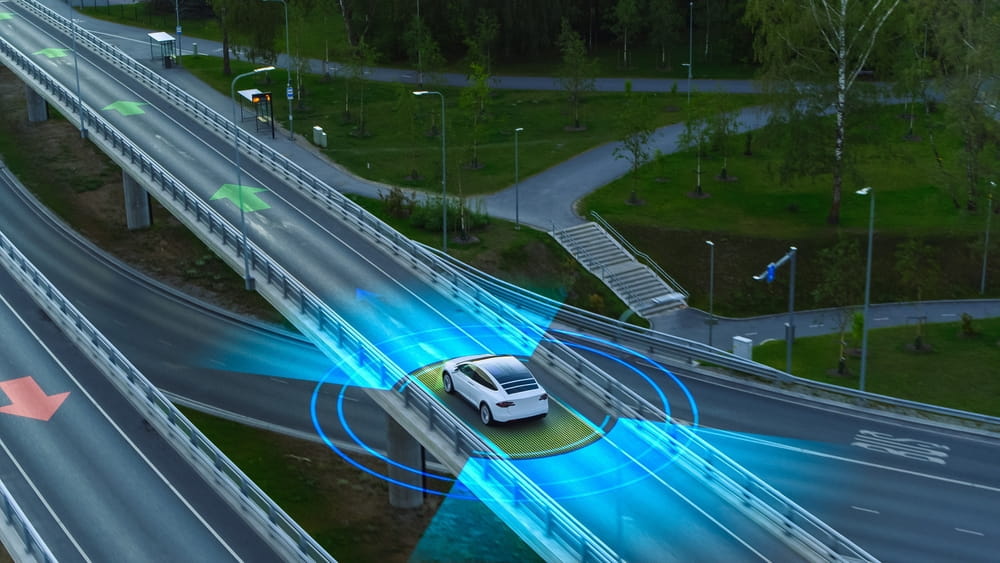
Perception models are only as good as the data they learn from. A robotics stack trained on noisy or inconsistent labels will hesitate when it should act and act when it should hesitate. For autonomous vehicles, where decisions happen in milliseconds and consequences can be irreversible, the quality of every bounding box and segmentation mask shows up in how the model behaves on the road.
The Role of Annotation in AV Safety and Performance
Safety cases for autonomous driving rest on perception models that detect and classify road users across a wide range of conditions. Rain, glare, nighttime driving, occluded pedestrians, and construction zones all stress perception in different ways. High-quality annotation gives models the reference points they need to generalize across these conditions rather than overfitting to clean highway footage. When annotators correctly distinguish between a cyclist and a pedestrian walking a bike, models learn the subtle cues that drive better predictions.
Where Annotation Fits in the AV Stack (Perception, Prediction, Planning)
Annotation touches every layer of the autonomous stack. In perception, labels train object detectors and segmentation networks. In prediction, annotated trajectories teach models how cyclists, drivers, and pedestrians tend to move over time. In planning, labeled scenarios inform policies that govern lane changes, yields, and merges. Because these layers feed into each other, weak annotation at one stage propagates through the whole pipeline.
What Makes AV Data Annotation Different?
Annotation for autonomous vehicles is harder than most other computer vision work. Data arrives in massive volumes from multiple synchronized sensors, scenes include dozens of moving actors per frame, and the cost of a labeling error can be severe. Annotators need domain fluency in traffic rules, vehicle behavior, and regional driving conventions that differ from city to city, which is why human-in-the-loop workflows backed by trained domain experts have become standard practice rather than a nice-to-have. Pure automation cannot reliably resolve the ambiguous cases that define real driving, and pure manual labeling cannot scale to the volumes modern AV programs need.
Temporal consistency adds another layer of difficulty. An object tracked across a hundred frames needs a stable identity, accurate position, and consistent class label throughout. Teams also have to reconcile labels across modalities so that a car in the camera frame matches the same car in the LiDAR point cloud, with agreement on size, heading, and velocity. Innovative annotation platforms address some of this through model-assisted labeling, where a pre-trained model produces draft annotations that human reviewers correct and refine. Done well, this combination raises throughput without giving up quality.
Key Autonomous Vehicle Use Cases
Autonomous mobility covers a wide spectrum of applications, each with its own annotation priorities and edge cases. Perception teams working in any of these areas face the same core challenge of teaching models to read the world accurately, even though the sensors, environments, and failure modes look very different from one domain to the next.
On-Road Driving and Robotaxis
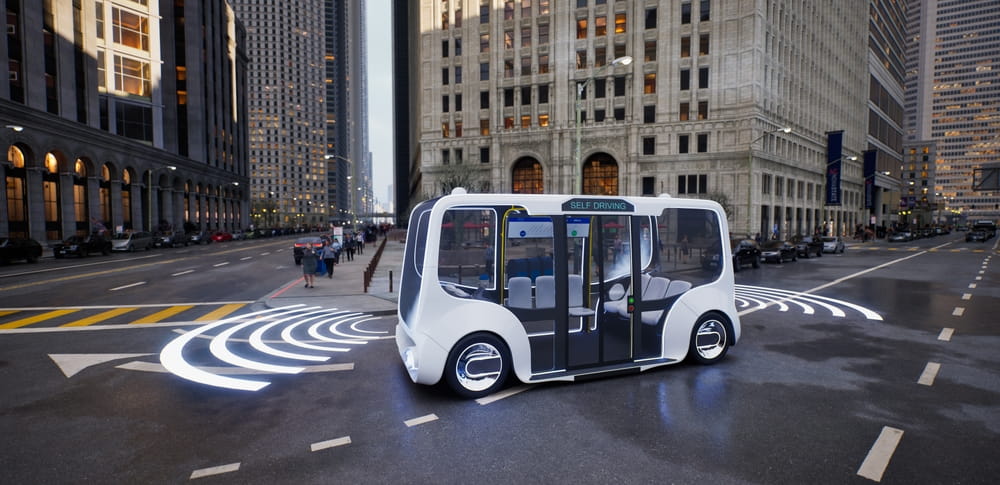
Robotaxi fleets and autonomous passenger vehicles need annotated data that reflects the full complexity of urban driving. That includes jaywalkers, double-parked trucks, emergency vehicles, temporary signage, and the chaotic geometry of unprotected left turns. Labels have to be precise enough to let perception models distinguish a delivery worker stepping off a curb from one simply standing near it. HD mapping work also fits in here, with annotators labeling lane boundaries, road features, and static infrastructure that give vehicles the spatial context they need to navigate safely.
Trucking and Freight
Long-haul trucking puts different demands on perception than urban driving. Highway scenes call for long-range object detection, accurate speed and distance estimates at hundreds of feet, and reliable classification of vehicles, debris, and lane markings under varied weather. Annotation work for trucking leans heavily on synchronized LiDAR and camera data, with careful attention to the kinds of high-speed scenarios that play out on interstates and freight corridors.
In-Cabin Driver and Occupant Monitoring
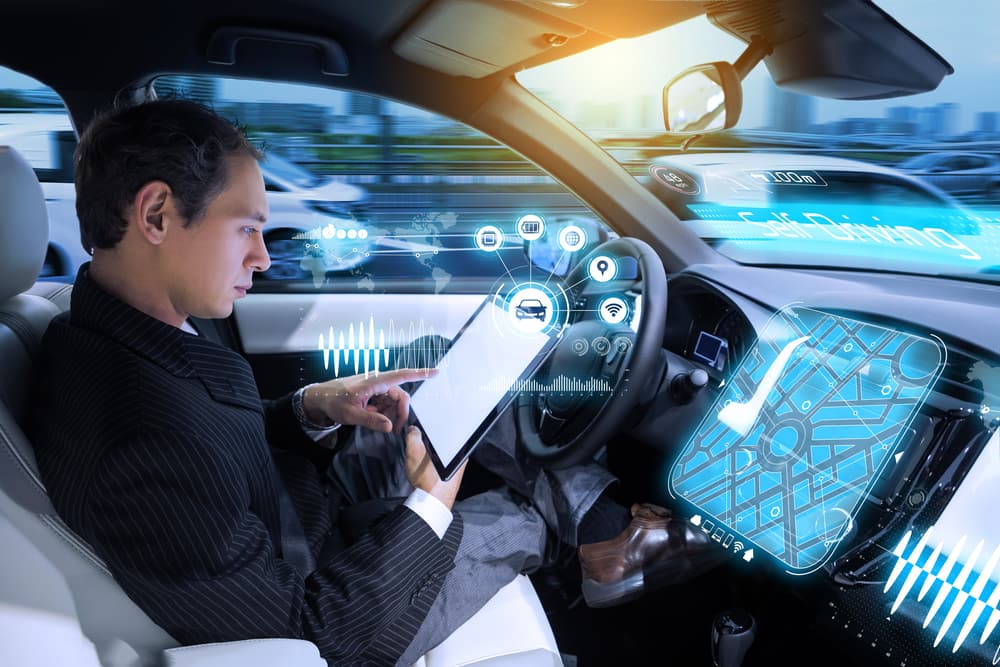
In-cabin systems watch drivers and passengers to detect drowsiness, distraction, seatbelt use, and occupancy. Annotation focuses on gaze direction, facial landmarks, hand position, and posture. Quality matters here because false alarms erode driver trust while missed detections defeat the purpose of the system.
Occupant monitoring extends the same approach to child presence detection, comfort control, and emergency response, which means annotators need to label body movements, seat occupancy, and interactions with infotainment systems with the same precision applied to driver state. Privacy obligations also shape the workflow, with face blurring, identity protection, and personally identifiable information (PII) handling baked into the annotation pipeline before any data reaches a labeling team.
Beyond the Road: Aerial, Maritime, and Industrial Robotics
Autonomous mobility reaches well past cars and trucks. The annotation discipline stays consistent across these adjacent domains even as the sensors and scenes change dramatically.
Aerial Mobility
Aerial systems, including drones and eVTOL aircraft, need annotated imagery for terrain mapping, object detection, and safe landing zone identification.
Maritime Systems
Maritime platforms rely on labeled sonar, video, and radar data to spot vessels, obstacles, and environmental features in challenging oceanic conditions.
Agricultural Robotics
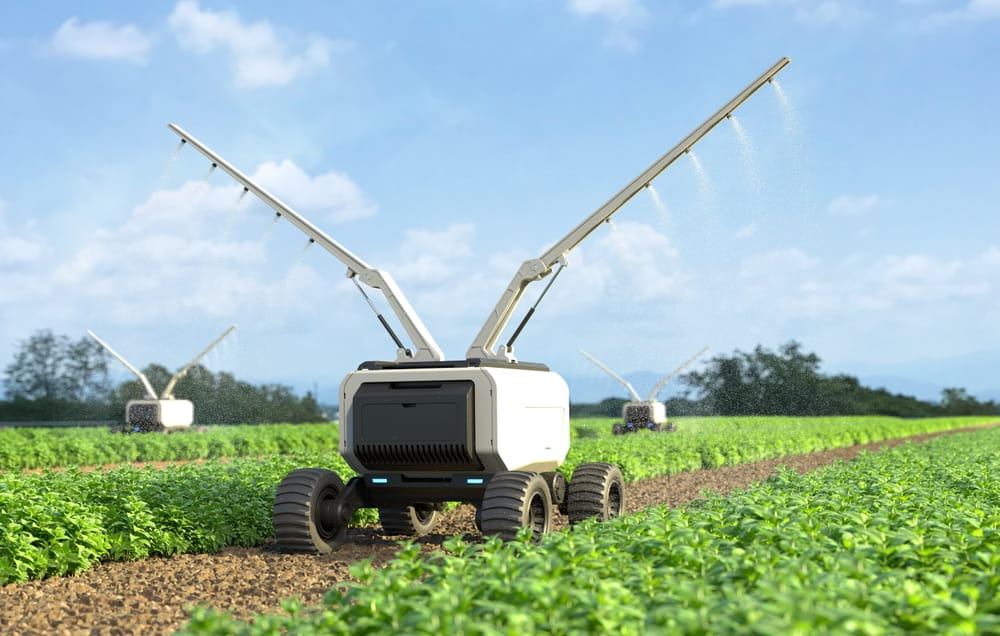
Agricultural robots use annotated drone and ground-level imagery to classify crops, detect weeds, and count fruit for precision spraying and harvesting.
Manufacturing Robotics
Manufacturing robots draw on labeled defect detection and component recognition data to handle quality control, pick-and-place tasks, and predictive maintenance.
Core Data Modalities and Annotation Types
Perception teams rarely work with a single sensor. A modern autonomous platform fuses data from cameras, LiDAR, radar, and sometimes thermal imaging, and annotators have to label each modality correctly while keeping them aligned.
Camera, LiDAR, and Sensor Fusion Data
Each sensor type contributes something different to perception, and annotation strategy has to match the strengths and limitations of each. The table below summarizes how the three primary modalities compare for AV perception work.
| Sensor | What it captures | Strengths | Limitations | Common annotation types |
|---|---|---|---|---|
| Camera | 2D color and texture | Object classification, sign reading, lane detection | Struggles in low light, no native depth | 2D bounding boxes, semantic segmentation |
| LiDAR | 3D point clouds | Accurate distance and dimensions, works in low light | Expensive, lower resolution at long range | 3D cuboids, point cloud segmentation |
| Radar | Range and velocity | Works through fog, rain, and dust | Low spatial resolution | Object tracking, velocity labels |
Sensor fusion annotation ties these streams together so models can learn complementary signals rather than relying on any single input. Getting fusion right depends on accurate sensor calibration and tight timestamp synchronization across modalities, since labels that look correct in one stream can be off by meters in another if the underlying alignment is wrong. Ground-truth establishment for benchmarking has the same dependency, which is why mature annotation programs treat calibration verification as part of the labeling workflow rather than a separate step.
Bounding Boxes, Segmentation, and 3D Cuboids
Different perception tasks call for different annotation types. 2D bounding boxes locate objects in camera frames. Semantic and instance segmentation assign a class label to every pixel, which helps with drivable surface estimation and fine-grained scene parsing. 3D cuboids wrap objects in LiDAR point clouds with accurate dimensions and orientation, giving planning systems the spatial information they need to reason about clearance and trajectory.
Building a High-Quality AV Training Dataset
A strong training set balances volume with variety. Millions of labeled frames of clear-weather highway driving will not teach a model how to handle a blizzard or a downtown protest. Teams need deliberate curation, not just more data, which is exactly the gap active learning was designed to close.
Scenario Coverage and Edge Cases
Active learning earns its keep on long-tail scenarios. The basic loop runs like this: a model trained on the current dataset makes predictions on a large pool of unlabeled driving data, the system scores each frame by how uncertain the model was, and annotators get sent the highest-uncertainty frames first. Those new labels feed back into the next training cycle, and the model gets sharper precisely where it was weakest.
Unusual vehicles, ambiguous gestures from traffic officers, wildlife crossings, and construction detours all surface through this kind of uncertainty sampling. Synthetic data and simulation extend the same idea by letting teams generate rare scenarios on demand, then validate and refine the synthetic annotations against real-world data so models can train on edge cases that almost never appear in raw driving logs.
Quality Assurance and Safety Standards
Quality assurance in AV annotation has to be rigorous and layered. Multiple reviewers, consensus scoring, gold-standard test sets, and automated consistency checks all play a role, and modern QA workflows lean on dashboards and analytics so teams can catch drift in label quality before it shows up in model performance. Privacy controls, including face blurring and license plate redaction, should be applied consistently and verified at scale within the same workflow. Teams working toward ISO 21448 or ISO 26262 compliance also need traceability across the annotation pipeline, with clear audit trails showing who labeled what and how disagreements were resolved.

Partner with iMerit for High-Quality AV Data Annotation
Building safer autonomy starts with the data, and iMerit has spent years helping perception teams get it right. iMerit provides software-delivered services for data annotation and model fine-tuning by unifying automation, human domain experts, and analytics in a single workflow. Our autonomous mobility solutions support perception teams across robotaxis, trucking, in-cabin monitoring, and adjacent robotics domains, with labeling expertise spanning camera, LiDAR, radar, and fused sensor data. We pair active learning workflows with rigorous QA and experienced annotators who know the road.
Contact our experts today to learn how we can help your program deliver safer, smarter autonomy.